The spooky stories surrounding historical sites and shrines in the Sanyo region include a mix of those based on historical facts and legends, and personal accounts that cannot be verified even after tracing their sources. In this paper, we have compared specific claims written on external rumors-sharing pages for three locations—Dan-no-ura, Kibitsu Shrine, and the area around Okayama Castle—with official facility and manager documents, separating what can be verified from what remains unclear. The ranking reflects the quality of the research materials, not the truthfulness of the supernatural occurrences.
Survey methods and evaluation criteria
The publication of the rumors themselves is not considered proof of the phenomenon; rather, each page is broken down into claim units based on the actual date, place, person, tradition, phenomenon, and ritual method described. The judgment is as follows: "Agreement" if all claims are supported by independent sources; "Partial agreement" if there is a coexistence of support and unconfirmed information; "Disagreement" if there is even one directly contradictory claim; "Unmeasurable" if there is no evidence that can be directly compared; and "New Fact" if, although a comparative judgment is not possible, an important fact not found in the rumor is confirmed in official sources. The source quality score is evaluated on five axes: source transparency, historical and spatial context, safety information, recency of information, and source transparency of the rumor, and is not converted into the truthfulness or danger level of the supernatural phenomenon.
| Rank | point | The main points of the rumor | judgement | Document quality |
|---|---|---|---|---|
| 1 | Dannoura (near Mimosusogawa Park) | Regarding Dan-no-ura (near Mimosusogawa Park), the Rumor Page identifies the Dan-no-ura battlefield as the site of the Battle of Dan-no-ura in 1185 (Juei 4), and states that it is now developed as "Mimosusogawa Park"... | Partial match | 88/100 |
| 2 | Kibitsu Shrine (Okama-den Hall) | Regarding Kibitsu Shrine (Okama-den), the rumor page cites the legend of Ura as the background for its frightening nature, stating, "The Narugama ritual performed at Okama-den is said to have originated as a ceremony to quell Ura's growling..." | mismatch | 87/100 |
| 3 | Around Okayama Castle (Ujo Park) | A rumor page dealing with the area around Okayama Castle (Ujo Park) lists the location as "Ujo Park (Okayama Castle Ruins)" and states that "Kobayakawa Hideaki was the lord of the castle." It also states that "when the Ukita clan built the castle (1... | Partial match | 81/100 |
1st Place: Dan-no-ura (near Mimosusogawa Park) | Partial Match (88 points)
The rumored details
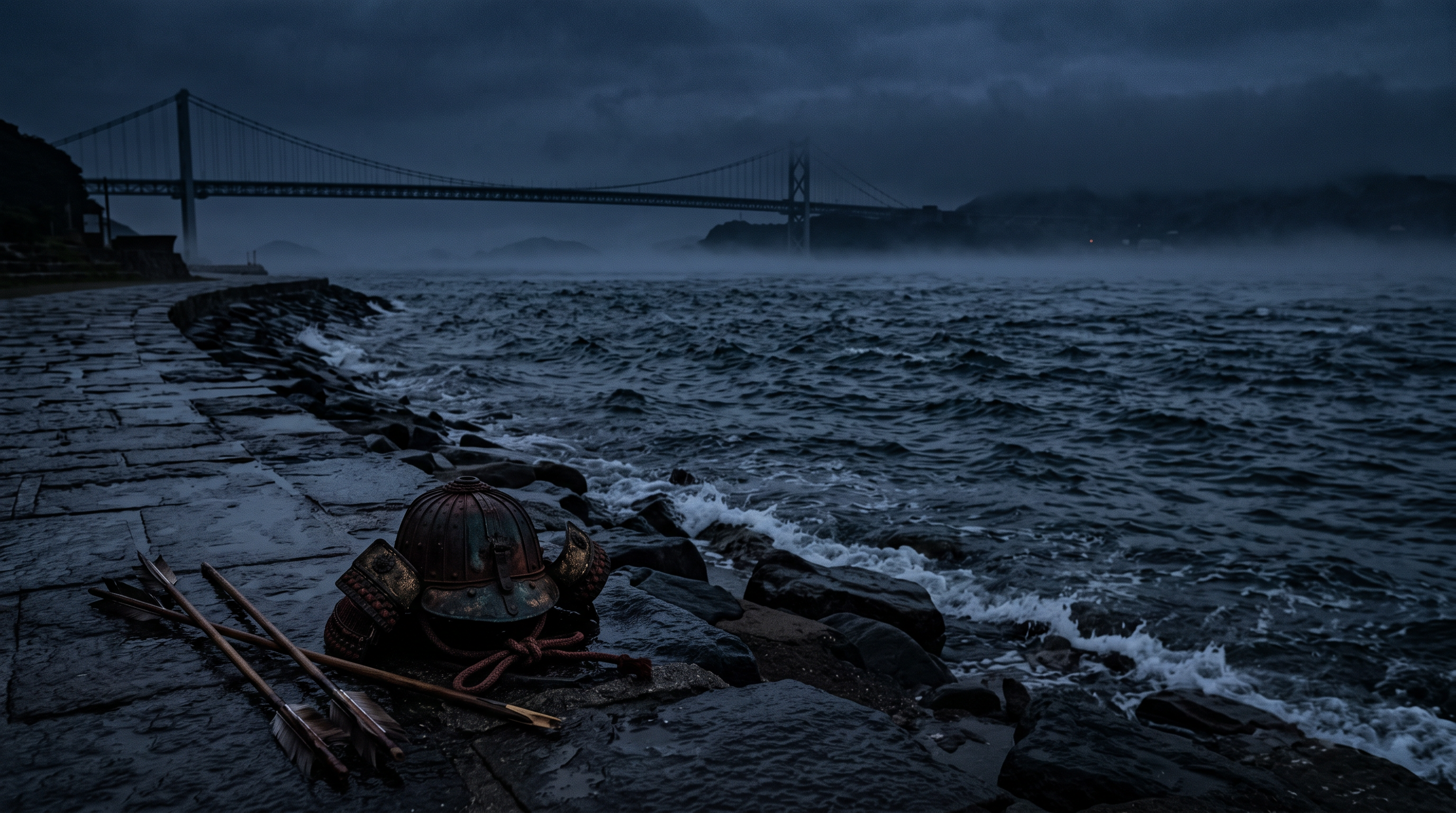
Regarding Dan-no-ura (near Mimosusogawa Park), the rumor page explains that the Dan-no-ura battlefield was the site of the Battle of Dan-no-ura in "1185 (Juei 4)," and that it is now developed as "Mimosusogawa Park." It then lists "sightings of warrior spirits," "appearances of boy spirits," "voices heard mixed with the sound of waves," and "sleep paralysis during overnight stays." The latter part of this page consists of rumors presented by the same page and should be treated separately from confirmed events.
Source of the rumor and date of verification
The rumor is a secondary publication found in an article dated July 23, 2025, in the Paranormal Investigations section. While the article mentions a warrior, a boy, a voice, and sleep paralysis, it is treated as information of unknown origin because no records or original sources are provided to identify individual witnesses.
- Paranormal Investigation: "The Battle of Dan-no-ura | Rumors of Ghost Stories"(Verification date: 2026-09-20) — The article explains that the Dan-no-ura battlefield was the site of a battle in "1185 (Juei 4)" and is now maintained as "Mimosusogawa Park," and then lists "sightings of warrior spirits," "appearances of a boy's spirit," "voices heard mixed in with the sound of waves," and "sleep paralysis during stays."
Things that could be confirmed from official and primary source materials
Checking the Yamaguchi Prefecture tourism website for Dan-no-ura (near Mimosusogawa Park), the official listing states that the Battle of Dan-no-ura, the final battle between the Minamoto and Taira clans, took place there in 1185 (Juei 4). The battle took place in Hayatomo Strait, which is the narrowest part of the Kanmon Strait and is known for its strong currents. The coastline is now developed as Mimosusogawa Park. The address is Mimosusogawa-cho, Shimonoseki City, Yamaguchi Prefecture, and the park's contact information is also listed. There are no mentions of sightings of warriors or boys, voices, or sleep paralysis.
- Yamaguchi Prefecture Tourism Website: "Dannoura Battlefield Site (Mimosusogawa Park)"(Verification Date: 2026-09-20) — It states that "In 1185 (Juei 4), the Battle of Dan-no-ura, the final battle between the Minamoto and Taira clans, took place," and that "the seaside overlooking the site of the ancient battlefield is now developed as Mimosusogawa Park," and also provides the address and contact information.
Points of agreement/contradictions
The battle of 1185 and the current location of Mimosusogawa Park match official records in terms of date, event, and purpose. However, the figures of warriors and boys, voices in the sound of waves, and sleep paralysis during overnight stays cannot be directly compared with the official documents obtained. The ability to confirm historical facts and the assertion that supernatural phenomena arise from them are two different things.
| The rumored atomic claim | Matching results | reason | Corresponding documents |
|---|---|---|---|
| 1185 (Juei 4) | support | The Yamaguchi Prefecture tourism website also clearly states that the Battle of Dan-no-ura took place in 1185 (Juei 4), so the date and event correspond. | Yamaguchi Prefecture Tourism Website: "Dannoura Battlefield Site (Mimosusogawa Park)" |
| It is currently being developed as "Mimosusogawa Park". | support | The official tourism page explains that the seaside area overlooking the site of the old battlefield is currently being developed as Mimosusogawa Park. | Yamaguchi Prefecture Tourism Website: "Dannoura Battlefield Site (Mimosusogawa Park)" |
| Sighting of a warrior's ghost | Unconfirmed | The official documents obtained lack the date and time of the sighting, the person who recorded it, and observational data, making it impossible to independently compare the rumored phenomenon. | No official data available for direct comparison. |
| Human voices can be heard amidst the sound of waves. | Unconfirmed | Without audio recordings or independent documentation showing the conditions under which the phenomenon occurs, it is impossible to verify its existence or non-existence based solely on the published text. | No official data available for direct comparison. |
Alternative interpretation
Official documents indicate that the strong currents in the Kanmon Strait are an environmental factor that can cause complex water sounds in this area. However, there are no observational records indicating that specific sounds or figures were misidentified due to the currents, and therefore, individual experiences cannot be definitively explained.
Scope and limitations of the investigation
The scope of our verification was limited to rumor articles we were able to obtain directly and location pages on the Yamaguchi Prefecture tourism website. We were unable to identify individual sighting dates and times, recordings, filming conditions, accommodations, or third-party reenactments. The mere absence of mention of the strange occurrence on the official page does not mean that it does not exist or is false.
Verification results: Partial match
Of the specific claims included in the rumors, independent sources supported the Battle of Dan-no-ura in 1185 and the fact that the coastline was developed into Mimosusogawa Park. On the other hand, there are no official records that directly correspond to sightings or voices of warriors or boys, or sleep paralysis, so it is described as "partially consistent" because supported historical facts and unconfirmed phenomena coexist.
Document Quality Score
| Source transparency | 26/30 | We have separated the rumor pages from the official tourism pages, and made it possible to track each URL, verification date, and corresponding claims. |
|---|---|---|
| Historical and spatial context | 24/25 | We were able to confirm the correspondence between the battle of 1185, the currents of the Hayatomo Strait, and the current park development, across time and space. |
| Safety information | 17/20 | The official website includes the location, transportation information, and contact details for park management, allowing you to secure a point of contact before visiting the site. |
| Newness of information | 13/15 | We reacquired both on September 20, 2026, but the rumored individual experiences do not have occurrence dates or updateable observation records. |
| Transparency of the source of rumors | 8/10 | While the list of rumors and their publication dates can be confirmed, the first appearance of the eyewitness accounts, the person who recorded them, and the observation conditions are not clearly stated. |
| total | 88/100 | This is the overall quality of the materials. It does not represent the degree of truthfulness or danger associated with the supernatural phenomena. |
Safety information and maps
Along the Kanmon Strait, be careful of roads, strong currents, and the risk of falling into the sea. Do not enter areas outside the fence or restricted access zones. Avoid dangerous approaches for solitary nighttime surveys or sound checks, and check with the management office for information on facilities and traffic conditions.
Map location: These are confirmed coordinates indicating the park surface of Mimosusogawa Park.
Check the area around Dannoura (near Mimosusogawa Park) on Google Maps.
2nd Place: Kibitsu Shrine (Okama-den Hall) | Disagreement (87 points)
The rumored details
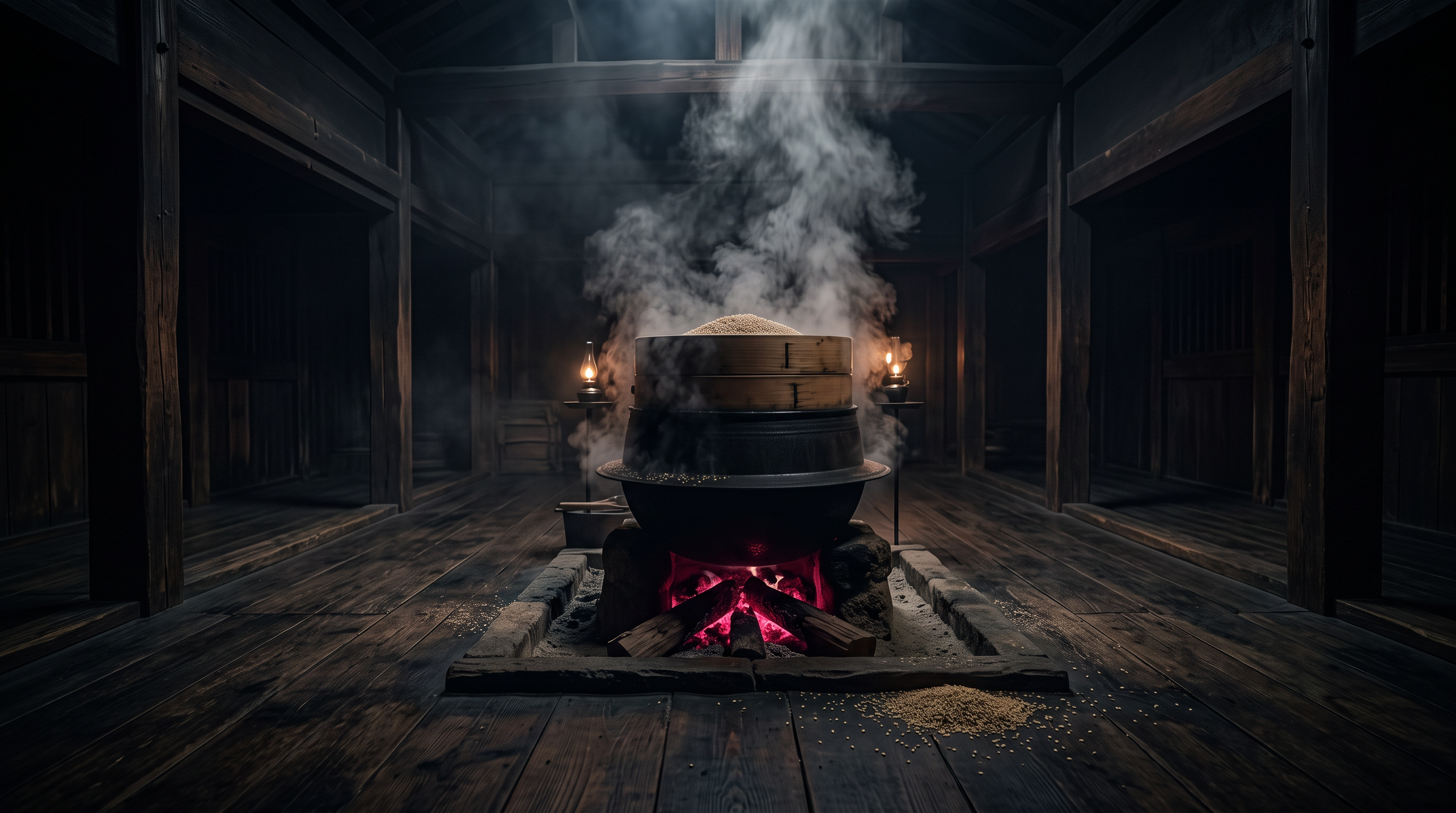
Regarding Kibitsu Shrine (Okama-den), the rumor page cites the legend of Ura as the background for its frightening nature, explaining that "the Narugama ritual performed at Okama-den is said to have begun as a ceremony to silence Ura's growl." Furthermore, it introduces the judgment method as a choice between two options, stating, "If a sound is made, it is considered 'good fortune,' and if no sound is made, it is considered 'bad fortune'." "The loudness or tone of the sound has no meaning; it's all about whether a sound is made or not."
Source of the rumor and date of verification
The rumors and explanations are published in the "Tohokami Emitame" articles dated August 6, 2025, and updated September 17, 2026. While linking the Onra legend to the Narukama ritual, the articles also contain specific details about how the sound was judged, so we compared them with the official explanation of Kibitsu Shrine on a sentence-by-sentence basis.
- Tohokami Emitame: "The Reason Why Kibitsu Shrine is Said to be Scary"(Verification date 2026-09-20) — The article connects the growling sound of Ura's head with the Narukama ritual, explaining that "if a sound is made, it is considered 'good fortune,' and if no sound is made, it is considered 'bad fortune'," and "the loudness or tone of the sound has no meaning; it is all about whether or not a sound is made."
Things that could be confirmed from official and primary source materials
Kibitsu Shrine (Okama-den) is written as "Okama-den" on its official website. The official explanation describes the Narukama ritual as a special ritual in which the sound of a cauldron is used to predict whether prayers to Kibitsuhiko-no-Mikoto will be answered, and it also refers to the record in the Tamon'in Diary from Eiroku 11 (1568) and the Ugetsu Monogatari. Its origin is linked to the legend of Ura's groaning and a dream revelation. On the other hand, the actual judgment is said to be based on the loudness and length of the cauldron's sound, and it is clearly stated that neither the priests nor the Aso-me give the answer, but that the participants feel the sound in their own hearts and make their own judgment.
- Kibitsu Shrine's official "Narukama Ritual"(Confirmed on 2026-09-20) — The official page explains, "The loudness and length of the sound coming from this cauldron will determine whether it brings good or bad fortune, but neither the priest nor the Aso-me who performed the ritual will say anything about the answer. You will have to feel the sound with your own heart and make your own judgment."
Points of agreement/contradictions
The point that the origin of the ritual is linked to Ura's growl is addressed on both the rumor page and the shrine's official page. However, the explanation on the rumor page, "If it makes a sound, it's good; if it doesn't, it's bad," and "The volume and tone of the sound have no meaning," directly contradicts the official explanation, "Good or bad fortune is judged by the volume and length of the sound," and "The attendants do not give the answer."
| The rumored atomic claim | Matching results | reason | Corresponding documents |
|---|---|---|---|
| The Narukama ritual, performed at the Okama-den hall, is also said to have originated as a ceremony to quell the growling of Ura. | support | The shrine's official website also provides a detailed explanation of the origin of the Narukama ritual, citing Ura's groans and a dream revelation. | Kibitsu Shrine's official "Narukama Ritual" |
| If a sound is heard, it is considered a good omen; if no sound is heard, it is considered a bad omen. | contradiction | The official explanation states that the judgment of good or bad fortune is not simply based on whether or not a sound is made, but rather on the loudness and duration of the sound produced by the cauldron. | Kibitsu Shrine's official "Narukama Ritual" |
| The volume and tone of the sound are irrelevant; all that matters is whether or not it makes a sound. | contradiction | The official description includes loudness and duration as factors in its judgment, which contradicts the rumor that loudness is meaningless. | Kibitsu Shrine's official "Narukama Ritual" |
Alternative interpretation
The frightening impression may have been formed by a combination of the legend of Ura's head groaning, the loud noises emanating from the cauldron, and the supernatural tales of Ueda Akinari. Official documents explain the rituals and legends, but they do not acknowledge modern paranormal phenomena.
Scope and limitations of the investigation
This time, we compared rumors with the official Kibitsu Shrine page about the Narukama ritual. We did not verify acoustic data that measured the sounds of the ritual, individual participants' opinions, or historical materials from before the tradition was established. We also avoided concluding that events in the tradition and historical events are the same fact.
Verification result: Mismatch
While the idea that the ritual originates from the legend of Ura is supported, the central explanation in the rumors—the two-choice judgment method—contradicts official documents. Official documents state that the judgment is based on the loudness and length of the sound, and that the person themselves perceives the result rather than the officiant conveying it. Therefore, prioritizing the direct contradiction, we have marked it as "inconsistent."
Document Quality Score
| Source transparency | 27/30 | By comparing the asserted claims in the rumors with the shrine's own explanations of its rituals, we were able to clearly identify the inconsistencies. |
|---|---|---|
| Historical and spatial context | 24/25 | I not only confirmed the legend of Ura, but also verified through official sources the 1568 documentary records and references to "Ugetsu Monogatari." |
| Safety information | 15/20 | The official website lists the days when the shrine is closed and the times for accepting visitors for religious ceremonies, providing basic information to help you avoid unnecessary visits. |
| Newness of information | 14/15 | The rumor page was updated on September 17, 2026, and the official page was retrieved again on September 20, 2026, to compare the current descriptions. |
| Transparency of the source of rumors | 7/10 | The rumor page describes the method of determination in detail, but it does not provide the primary sources or specific statements made by Shinto priests that support it. |
| total | 87/100 | This is the overall quality of the materials. It does not represent the degree of truthfulness or danger associated with the supernatural phenomena. |
Safety information and maps
The Mikamaden is a religious facility, so please refrain from any actions that may disrupt religious ceremonies or visits, unauthorized entry, loud noises, or the use of equipment for investigations. Please check the official information of Kibitsu Shrine before visiting, including details such as Friday closures and the fact that admission is only until 2 PM.
Map location: This is a registered location within the grounds of Kibitsu Shrine, and is a guide for visitors, not for the Okama-den hall itself.
Check the area around Kibitsu Shrine (Okama-den) on Google Maps.
3rd Place: Around Okayama Castle (Ujo Park) | Partial Match (81 points)
The rumored details
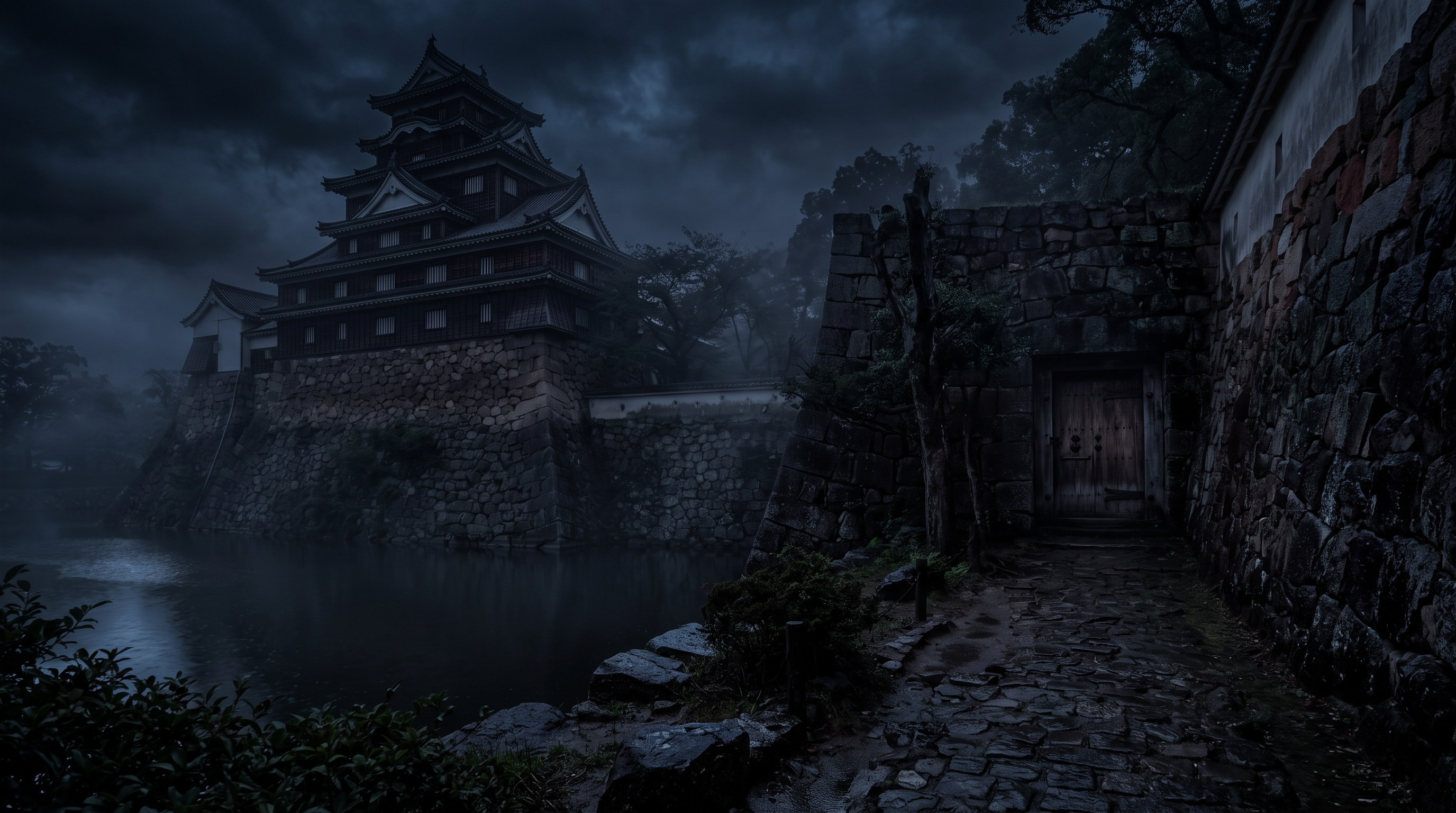
A rumor page dealing with the area around Okayama Castle (Ujo Park) lists the location as "Ujo Park (Okayama Castle Ruins)" and states that "Kobayakawa Hideaki was the lord of the castle." It also introduces the "stone walls from when the Ukita clan built the castle (1590-1597)," while stating that "it is rumored that there used to be a room that was never opened." Regarding the cellar, it mentions that "it is said that emergency food supplies were stored there."
Source of the rumor and date of verification
The rumor is a secondary publication found in the September 22, 2019 issue of "Ujo Park (Okayama Castle Ruins)" on the website "Akaizuka." It is a short article introducing the stone walls and cellars at the site, but it does not provide information about the "unopenable room," such as the person who carries the legend, the building in question, the location of the room, or the original source.
- The red mound at "Ujo Park (Okayama Castle Ruins)"(Verification date 2026-09-20) — The article states that "Kobayakawa Hideaki was the lord of the castle" and "it is rumored that there used to be a room that was never opened," and introduces "stone walls from when the Ukita clan built the castle (1590-1597)" and a cellar that is thought to have been used to store emergency food supplies.
Things that could be confirmed from official and primary source materials
Regarding the area around Okayama Castle (Ujo Park), the official history of Okayama Castle states that construction began in 1590 by Ukita Hideie and the keep was completed in 1597. The timeline also confirms that Kobayakawa Hideaki became the lord of Okayama Castle in 1600, began renovations in 1601, and died in 1602. The official guide to Ujo Park states that the park contains historical buildings such as the keep and is a popular place of relaxation for citizens. The official page obtained this time does not mention the "forbidden room" or the use of a cellar as an emergency food storage area.
- Okayama Castle Official "History of Okayama Castle"(Confirmed on 2026-09-20) — The official history states that "In 1590, Ukita Hideie moved the main keep from Ishiyama to Okayama and began construction of Okayama Castle," "In 1597, the Okayama Castle keep was completed," and "In 1600, Kobayakawa Hideaki became the lord of Okayama Castle."
- Okayama Castle Official "Ujo Park"(Confirmed on 2026-09-20) — Regarding Ujo Park, it states that "the park contains historical buildings including the castle tower" and "it is a place of relaxation that is popular with citizens on a daily basis," and lists the operating hours, address, prohibited activities, and management office.
Points of agreement/contradictions
Official documents support the fact that Kobayakawa Hideaki was the lord of the castle and that it was built by Ukita Hideie between 1590 and 1597. However, it is not possible to identify which building or which room the "forbidden room" refers to, and there is no corresponding record in official history. The purpose of the cellar is also described in speculation by the rumor page itself and cannot be confirmed with the current documents.
| The rumored atomic claim | Matching results | reason | Corresponding documents |
|---|---|---|---|
| Kobayakawa Hideaki was the lord of the castle. | support | The official timeline of Okayama Castle clearly states that Kobayakawa Hideaki became the lord of Okayama Castle in 1600. | Okayama Castle Official "History of Okayama Castle" |
| Stone walls from the time the Ukita clan built the castle (1590-1597) | support | Official history states that Hideie Ukita began construction of the castle in 1590, and the keep was completed in 1597. | Okayama Castle Official "History of Okayama Castle" |
| It is rumored that there used to be a room that was never opened. | Unconfirmed | The location of the room, the building, the date, and the first appearance of the legend cannot be identified, and there are no records in the official history books that directly correspond to it. | No official data available for direct comparison. |
| It is said that they may have stored emergency food supplies there. | Unconfirmed | The rumor page also contains speculation, and the official page obtained does not provide a definitive explanation of the cavern's purpose. | No official data available for direct comparison. |
Alternative interpretation
While castles may have sections that are not open to the public for preservation, management, or structural reasons, this alone does not explain the origin of the legend of a "forbidden room." The impression given by the black exterior walls and old stone walls must be considered separately from the verifiable construction history and evidence of the existence of unidentified rooms.
Scope and limitations of the investigation
The materials obtained were a rumor page, the official history of Okayama Castle, and the official visitor guide for Ujo Park. We have not checked the castle's layout from the early modern period, room assignments, repair records, or excavation reports of the cellars. Since it is unclear whether the "unopenable room" refers to the main keep, an attached turret, or another building, we cannot definitively say that it did not exist.
Verification results: Partial match
The rumors regarding Kobayakawa Hideaki's time as castle lord and the construction date during the Ukita Hideie period corresponded with official history. However, the subject and basis of the "forbidden room" could not be identified, and the purpose of the cellar could not be confirmed by independent sources. Because plausible historical claims and unconfirmed traditions and speculations about their use coexist, it is only a "partial agreement."
Document Quality Score
| Source transparency | 24/30 | I obtained a rumor page and two official pages, and separately tracked the history of the castle's owners, the construction date, and unconfirmed legends. |
|---|---|---|
| Historical and spatial context | 22/25 | I was able to confirm from the official timeline that construction of the castle began in 1590, the keep was completed in 1597, and that Kobayakawa Hideaki resided there for a period of time. |
| Safety information | 18/20 | The official guide for Ujo Park includes specific information on operating hours, prohibited activities, parking, and the management office. |
| Newness of information | 11/15 | The official page has been updated with the latest information, but the rumor page was published in 2019 and does not have any records of updated lore or initial appearances. |
| Transparency of the source of rumors | 6/10 | While the location and the wording of the rumor can be confirmed, the subject of the locked room, the person who passed on the legend, the date, and supporting documents are not indicated. |
| total | 81/100 | This is the overall quality of the materials. It does not represent the degree of truthfulness or danger associated with the supernatural phenomena. |
Safety information and maps
Vehicles, open flames, drones, and electric vehicles are prohibited within the park. Do not climb on stone walls or structures, enter closed areas, be considerate of other visitors and local residents, even at night, and check the official guide for the latest usage rules.
Map location: These are verified coordinates indicating the park area of Okayama Castle, including Ujo Park.
Check the area around Okayama Castle (Ujo Park) on Google Maps.
What I learned by crossing locations
At all three locations, the scary stories are based on history and legends that can be confirmed through independent sources, but these facts alone cannot support the sightings or supernatural occurrences. At Dan-no-ura, there was a conflict between the history of the battle and unconfirmed personal accounts; at Kibitsu Shrine, there was a conflict between the official tradition and a mistakenly simplified method of determining the Shinto rituals; and at Okayama Castle, there was a conflict between the verifiable history of the castle's lords and an unidentified "forbidden room." In particular, at Kibitsu Shrine there was a direct contradiction with the official explanation, which differs in nature from the lack of evidence at the other two locations.
summary
Through cross-referencing of documents, we were able to confirm the Battle of Dan-no-ura in 1185, the Narukama ritual originating from the Onra legend of Kibitsu Shrine, and the construction date of Okayama Castle and Kobayakawa Hideaki's history as its lord. On the other hand, there is no direct documentation for the eyewitness accounts and voices at Dan-no-ura, nor for the "unopenable room" of Okayama Castle, and the two-choice explanation of good and bad fortune at Kibitsu Shrine contradicts official records. It is necessary to distinguish between the existence of history and legends and the actual existence of modern-day supernatural phenomena.
FAQ
Does "partial match" mean that some of the paranormal phenomena have been proven?
No. The partial agreement in this article indicates that some of the specific claims included in the rumors, such as historical dates and facility uses, were confirmed, while the remaining claims, such as sightings and phenomena, remained unconfirmed.
Is the legend of Kibitsu Shrine itself, which is inconsistent, also incorrect?
The origin of the legend corresponds to the official explanation. The discrepancy lies in the fact that the rumor page states that the sound is judged "simply whether it makes a sound or not," which contradicts the official explanation that uses loudness and duration as criteria for judgment.
If I go to the location at night, can I verify the rumors?
A single visit at night is insufficient for verification, as it does not provide the necessary conditions for reproduction or a basis for comparison. Avoid entering closed areas or interfering with religious activities, and prioritize following the rules and instructions of the facility's administrators.
How to read this article and safety precautions
" [2026 Latest] Top 3 Ranking of Ghostly Rumors at Historical Sites, Shrines, and Temples in the Sanyo Region This is an article compiled by the Horror Tales File editorial team as a story, based on publicly available information, rumors circulating in the community, and information submitted by readers. It does not definitively state the authenticity of paranormal phenomena.
- We do not recommend visiting restricted areas, private property, abandoned buildings, or dangerous locations at night.
- If you go to the site, always prioritize compliance with laws and regulations, instructions from facility managers, and consideration for nearby residents.
- You can submit personal experiences, correction requests, and deletion requests through the "Personal Experiences/Information Submission" or "Contact Us" sections.
View editorial policy / Please share your experiences and information here. / inquiry