This analysis focuses on three locations in southern Kanto—Hachioji Castle Ruins, Ojaga Pond, and Tama Lake—based on rumors circulating in the forests and waterfront areas of the region. We analyzed the dates, events, origins of the legends, and claims of supernatural occurrences as described on external rumor websites, and cross-referenced them with publicly available information from local governments and facility managers. The ranking is based not on fear or danger, but on the transparency and comparability of the information.
Survey methods and evaluation criteria
The rumor pages were used to verify whether the rumors were actually published and to confirm their specific content. Official sources were limited to pages of local governments or facility managers, and facts that could be independently verified regarding the same subject were compared. The judgments were as follows: "Agreement" if all claims were supported; "Partial Agreement" if there was a mix of support and unconfirmed information; "Disagreement" if there was a direct contradiction; "Unmeasurable" if there was insufficient comparative material; and "New Fact" if a significant fact not present in the rumor was confirmed, even if a direct comparison was not possible. The existence of a location or address alone was not considered sufficient to support the supernatural phenomenon; judgments were made for each claim actually included in the rumor, such as the date, the whereabouts of the people involved, the use of the facility, and the history of the legend.
| Rank | point | The main points of the rumor | judgement | Document quality |
|---|---|---|---|---|
| 1 | Hachioji Castle Ruins | The page containing the rumor explains that Hachioji Castle ruins "fell in 1590 (Tensho 18) after being attacked by the forces of Maeda Toshiie and Uesugi Kagekatsu," and states that "the castle lord, Hojo Ujiteru, took refuge in Odawara when the castle fell..." | Partial match | 92/100 |
| 2 | Oujagaike Pond | The page listing the rumors states that several legends have been passed down through generations at Ojaga Pond, and includes a story that corresponds to the plot of "a love affair between an official and a village girl of different social classes." Furthermore, it states, "The village girl... | Partial match | 88/100 |
| 3 | Tama Lake | The page containing the rumor states that there is a mound at the end of the Sayama Hills, which extends south of Lake Tama, and that "the end of the mound was a mountain where elderly people who could no longer stand and sick people who had collapsed from exhaustion quietly awaited death..." | unmeasurable | 80/100 |
1st Place: Hachioji Castle Ruins | Partial Match (92 points)
The rumored details
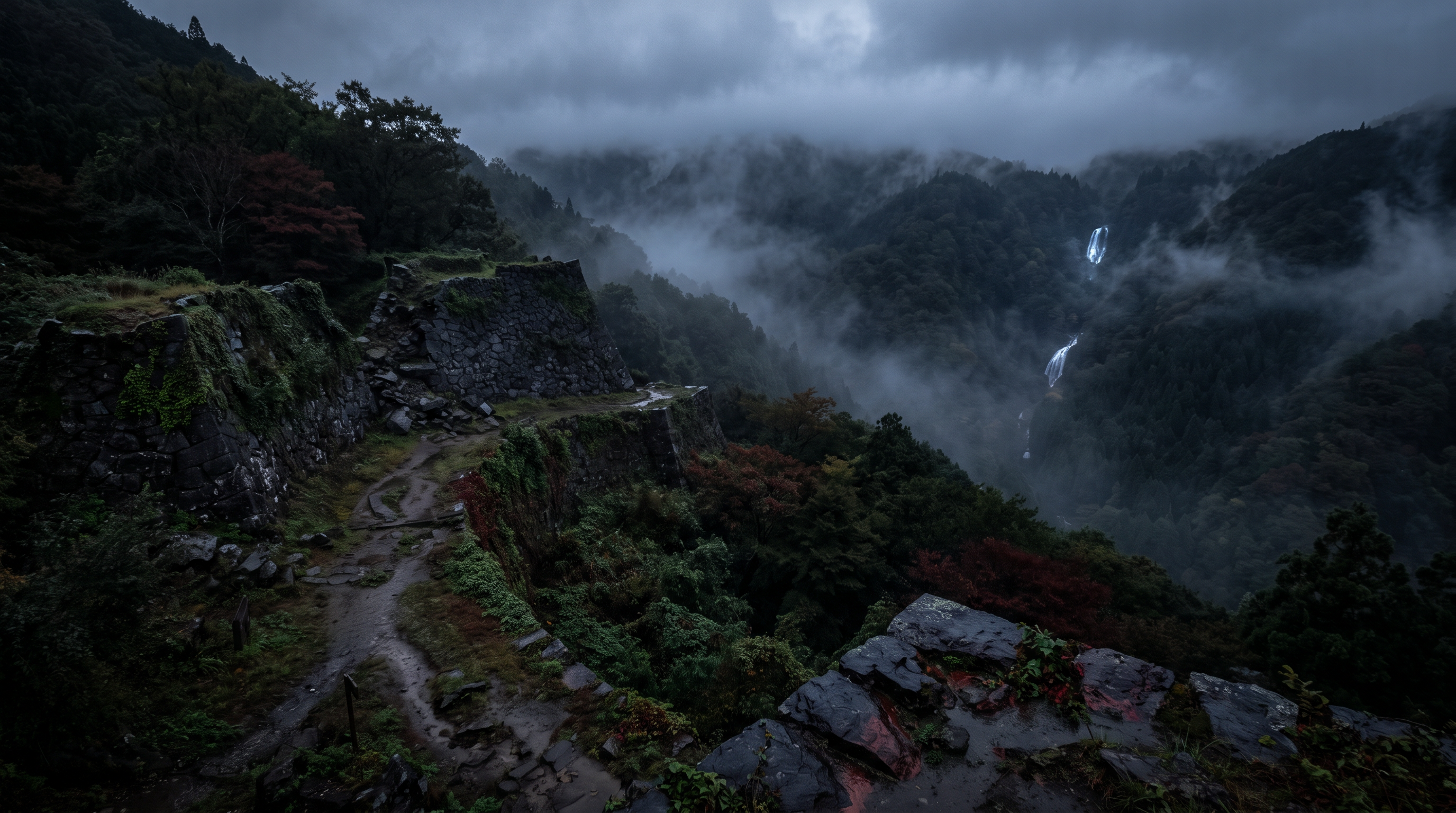
The page containing the rumor explains that Hachioji Castle ruins "fell in 1590 (Tensho 18) after being attacked by the forces of Maeda Toshiie and Uesugi Kagekatsu," and that "the castle lord, Hojo Ujiteru, was besieged in Odawara at the time of the castle's fall." Furthermore, it recounts that the women inside the castle committed suicide by throwing themselves into the Goshuden Waterfall, and that "the water of the river flowing from the Goshuden Waterfall turned red with blood," linking this to the rumor that the ghosts of these women appear there.
Source of the rumor and date of verification
I checked the Hachioji Castle Ruins page on the National Haunted Map as an example of secondary publication. The page lists the circumstances of the castle's fall and stories related to the waterfall, but it does not indicate the original source of each individual story. Therefore, while it can be confirmed that the rumors are currently publicly available, the original sources of the bloodshed descriptions and supernatural occurrences remain unknown.
- Nationwide Haunted Map: Hachioji Castle Ruins(Verification Date: 2026-09-20) — A secondary publication page containing information about the fall of the castle in 1590, the presence of Hojo Ujiteru and others in Odawara, the suicides of women, and rumors that the Takigawa River at the main palace was stained red with blood.
Things that could be confirmed from official and primary source materials
The official Hachioji City website describes the Hachioji Castle ruins as a mountain castle built by Hojo Ujiteru. It clearly states that the castle fell on June 23, 1590, as part of Toyotomi Hideyoshi's conquest of the Kanto region, when it was attacked by the forces of Maeda Toshiie and Uesugi Kagekatsu, and that Ujiteru was besieged in Odawara at the time. However, this official website does not confirm that women committed suicide by stabbing themselves in the throat, threw themselves into the Goshuden Waterfall, or that the river turned red with blood.
- Hachioji City Official Website "Hachioji Castle Ruins"(Confirmed on 2026-09-20) — It explains that the castle fell on June 23, 1590 (Tensho 18) when it was attacked by the forces of Maeda Toshiie and Uesugi Kagekatsu, and that the castle lord, Hojo Ujiteru, was besieged in Odawara at the time.
Points of agreement/contradictions
The year the castle fell, the central figures of the attack, and the rumor that the castle lord was in Odawara all align with records from Hachioji City. However, the specific details of the women's final moments and the discoloration of the river cannot be corroborated within the scope of the official website's description. It is necessary to distinguish between the battle that can be confirmed as historical fact and the story of the waterfall that has been told in later generations.
| The rumored atomic claim | Matching results | reason | Corresponding documents |
|---|---|---|---|
| In 1590 (Tensho 18), it was attacked and fell to the forces of Maeda Toshiie and Uesugi Kagekatsu. | support | Hachioji City clearly states that the castle fell on June 23, 1590, during an attack by the forces of Maeda Toshiie and Uesugi Kagekatsu, and the subject, date, and event all match. | Hachioji City Official Website "Hachioji Castle Ruins" |
| The castle lord, Hojo Ujiteru, was besieged in Odawara when the castle fell. | support | The official Hachioji City website clearly states that Hojo Ujiteru was holed up in Odawara when the castle fell, and the location of the person matches. | Hachioji City Official Website "Hachioji Castle Ruins" |
| The water of the river flowing from the main palace waterfall was stained red with blood. | Unconfirmed | The city's official website, which we checked, did not contain any record of the waterfall water turning red with blood, and we were unable to secure any independent data that would allow for a direct comparison of the same phenomenon. | No official data available for direct comparison. |
Alternative interpretation
The significant historical event of the castle's fall in 1590 may have been intertwined with the striking geographical feature of the Goshuden Waterfall and later legends. The stories of the female spirit and the color of the river that are told today cannot be derived solely from the existence of historical facts.
Scope and limitations of the investigation
The sources we checked this time were the text in the National Haunted Map and the Hachioji City website's overview page for the Hachioji Castle ruins. The city website mainly focuses on the castle's history and facilities, and is not a comprehensive collection of historical materials covering all the damage and legends from when the castle fell. The fact that the story of the waterfall is not mentioned does not mean that it is immediately considered false.
Verification results: Partial match
The comparable claims that the castle fell on June 23, 1590, that it was attacked by the forces of Maeda Toshiie and Uesugi Kagekatsu, and that Hojo Ujiteru was in Odawara, were supported by official records. On the other hand, the claims about the women's method of suicide, such as jumping into a waterfall and the river turning red with blood, remain unconfirmed. Because both supported and unconfirmed claims coexist, the scope of the analysis was limited to the historical facts, resulting in a "partial agreement."
Document Quality Score
| Source transparency | 28/30 | The rumor page and the official Hachioji City page are published with separate URLs, allowing you to track the location of the texts you are comparing. |
|---|---|---|
| Historical and spatial context | 24/25 | Official documents provide concrete details about the castle's fall, including the attacking army, the lord's whereabouts, and the castle's layout. |
| Safety information | 18/20 | The official website provides specific information regarding the prohibition of nighttime visits, wildlife, undeveloped areas, and parking hours. |
| Newness of information | 13/15 | The Hachioji City official website was updated on September 1, 2026, and includes the latest facility status and cautionary information. |
| Transparency of the source of rumors | 9/10 | While the rumor's text and update information can be found, the original source of the waterfall legend is not presented. |
| total | 92/100 | This is the overall quality of the materials. It does not represent the degree of truthfulness or danger associated with the supernatural phenomena. |
Safety information and maps
Hachioji City strictly prohibits visits at night and late at night, and advises against entering unmaintained areas. Due to reports of black bear sightings, please stay on the designated walking paths even during opening hours and check the latest information provided by the management.
Map location: Displays the coordinates of the central feature of the castle ruins.
2nd place: Yujagaike|Partial match (88 points)
The rumored details
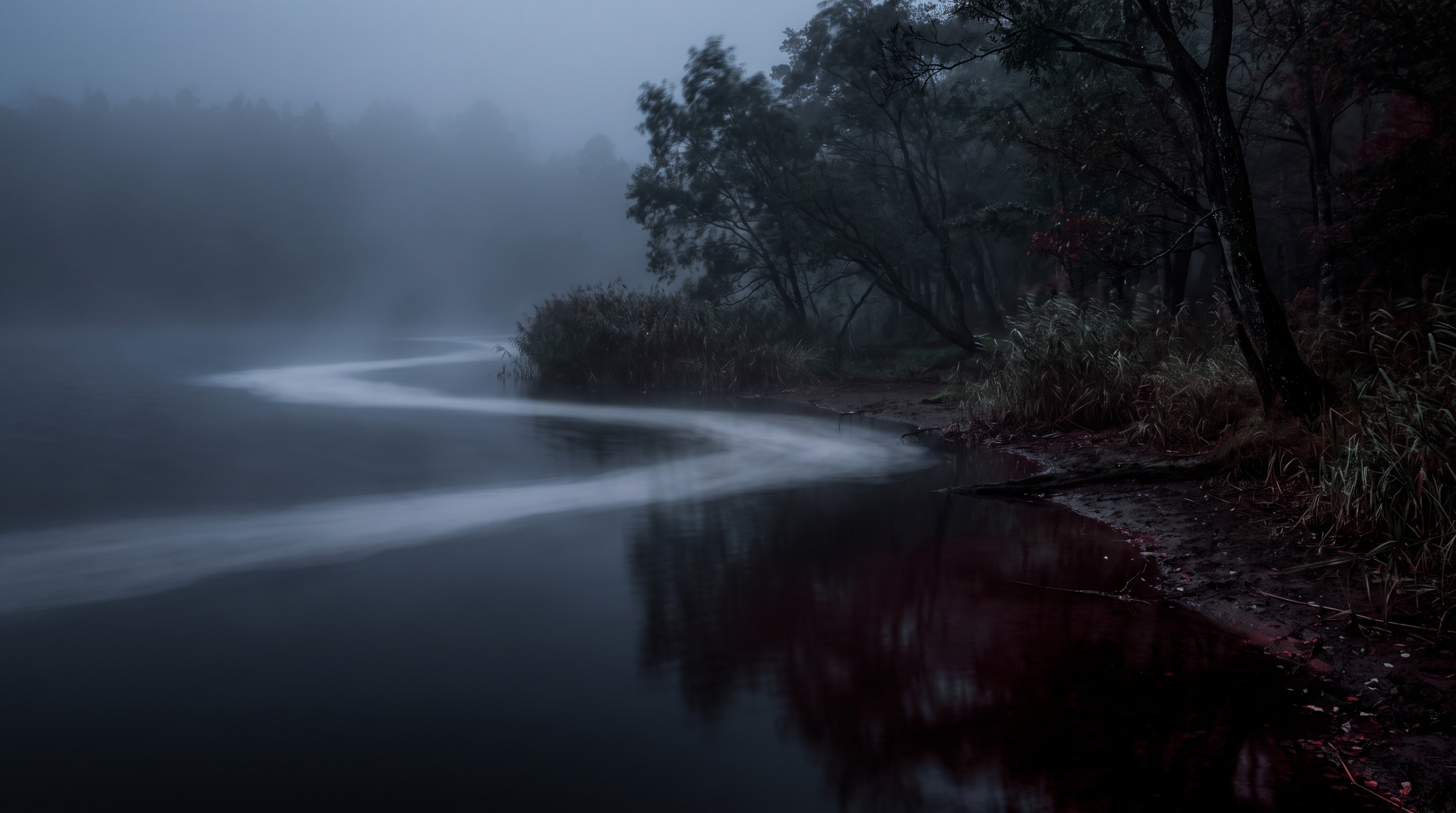
The page listing the rumors states that several legends have been passed down about Ojagaike Pond since ancient times, and includes a story that corresponds to the plot of "a love affair between an official and a village girl of different social classes." Furthermore, it connects this to the origin of the pond's name, stating that "the village girl set herself on fire, and her vengeful spirit transformed into a white snake that took up residence in the pond." Another story recounts that a bride, lamenting her discord with her mother-in-law, threw herself into the pond, and that a woman's sobbing can be heard at night.
Source of the rumor and date of verification
I checked the Ojagaike page of the National Haunted Map as an example of secondary publication. The page combines multiple storylines: a love affair between people of different social classes, a white snake, a tragic tale of a mother-in-law and daughter-in-law, and a female ghost. Since the title of the book or reference to the original text of the legend is not indicated, I have confirmed the content as a current rumor and have left the first appearance unknown.
- Nationwide Haunted Map: "Ojagaike Pond"(Verification Date: 2026-09-20) — This includes a story about a village girl who, heartbroken over a love affair between people of different social classes, set herself on fire and transformed into a white snake, and a rumor about a woman who threw herself into a pond due to discord between her daughter-in-law and mother-in-law, and how she was heard weeping.
Things that could be confirmed from official and primary source materials
The library guide to Ojagaike Pond in Togane City explains that Ojagaike Pond is an artificial lake created over a period of 10 years, from 1604 to 1614, and that numerous legends remain about it, including stories of a giant snake and the sound of weaving. The materials held in the library include "The Love Story of an Official and a Village Girl," "The Giant Snake of Ojagaike Pond Telling the Tragic Story of a Bride and Mother-in-law," and "The Origin of Ojagaike Pond." However, the city's own webpage does not recognize the village girl's self-immolation, the transformation of her vengeful spirit into a white snake, or the ghost of a woman at night as historical fact.
- Togane City: "Books related to Ojagaike Pond"(Verification Date: 2026-09-20) — It explains that Ojagaike Pond is an artificial lake completed between 1604 and 1614, and introduces local historical materials that deal with legends about a giant snake and the sound of weaving, as well as tragic stories of love between an official and a village girl, and conflicts between a daughter-in-law and mother-in-law.
Points of agreement/contradictions
The existence of multiple legends surrounding Ojagaike Pond, and the presence of local historical materials dealing with themes such as love, mother-in-law/daughter-in-law relationships, and giant snakes, are consistent with the official book guide. However, details such as the self-immolation, transformation into a white snake, and sobbing after jumping into the water cannot be confirmed solely from the description on the guide page. The fact that legends have been collected does not necessarily mean that their content is historical fact or evidence of a supernatural phenomenon.
| The rumored atomic claim | Matching results | reason | Corresponding documents |
|---|---|---|---|
| Several legends have been passed down about Ojaga Pond since ancient times. | support | The city of Togane explains that it has many legends, including those about giant snakes and the sound of weaving, and lists several legendary materials in its collection. | Togane City: "Books related to Ojagaike Pond" |
| The story tells of a forbidden love between an official and a village girl. | support | The library guide for Togane City clearly lists local historical materials dealing with "the love story between an official and a village girl," confirming that the legend of this love is recorded there. | Togane City: "Books related to Ojagaike Pond" |
| The village girl set herself on fire, and her vengeful spirit transformed into a white snake that took up residence in the pond. | Unconfirmed | The Togane City website lists materials related to the origin of the giant snake and the pond, but the series of claims that it transformed from a self-immolated snake into a white snake cannot be found in the main text. | No official data available for direct comparison. |
Alternative interpretation
The city's collection includes several works dealing with love, giant snakes, and mother-in-law/daughter-in-law relationships, suggesting that elements from separate folktales may have been reconstructed into a single narrative within the context of introducing haunted locations. The sounds of water and the nighttime environment could also influence the interpretation of sobbing.
Scope and limitations of the investigation
The Togane City page is a library guide that shows the location and overview of local historical materials, and does not include the full text of each material. Therefore, it has not been confirmed which materials record the self-immolation and transformation into a white snake and in what way. There are also no official records of supernatural phenomena observed in the area that fall within the scope of this discussion.
Verification results: Partial match
The existence of multiple legends dating back to ancient times, as well as local historical documents dealing with the love story between an official and a village girl, and the relationship between a mother-in-law and daughter-in-law and a giant snake, were supported by the Togane City page. However, the village girl's self-immolation, the transformation of the vengeful spirit into a white snake, and the female ghost appearing at night could not be confirmed in independent sources. Because there is a mix of support and unconfirmed information regarding the origins of the legends, it is classified as "partially consistent."
Document Quality Score
| Source transparency | 27/30 | The rumor text and the local history information guide for Togane City can be viewed on separate web pages, making the role of the sources clear. |
|---|---|---|
| Historical and spatial context | 23/25 | In addition to the construction date of the artificial lake, you can check the titles and holding information of legendary materials related to love, giant snakes, and mother-in-law/daughter-in-law relationships. |
| Safety information | 16/20 | It's clear that it's an artificial lake used for fishing and hiking, but detailed information about local regulations is limited. |
| Newness of information | 13/15 | The Togane City page was updated in March 2024, and the contact information for checking collections and facility information is still publicly available. |
| Transparency of the source of rumors | 9/10 | While two specific rumors are mentioned, there is no information on their correspondence to the original folktale or their first appearance. |
| total | 88/100 | This is the overall quality of the materials. It does not represent the degree of truthfulness or danger associated with the supernatural phenomena. |
Safety information and maps
Ojagaike Pond is an artificial lake, and there are waterfront areas and unpaved sections around it. Do not enter the area at night for the purpose of verifying rumors. To avoid falling or getting lost, use only public roads and usable routes during daylight hours, and prioritize local regulations.
Map location: Displays the coordinates of the center of the pond's water surface.
3rd place: Lake Tama|Unmeasurable (80 points)
The rumored details
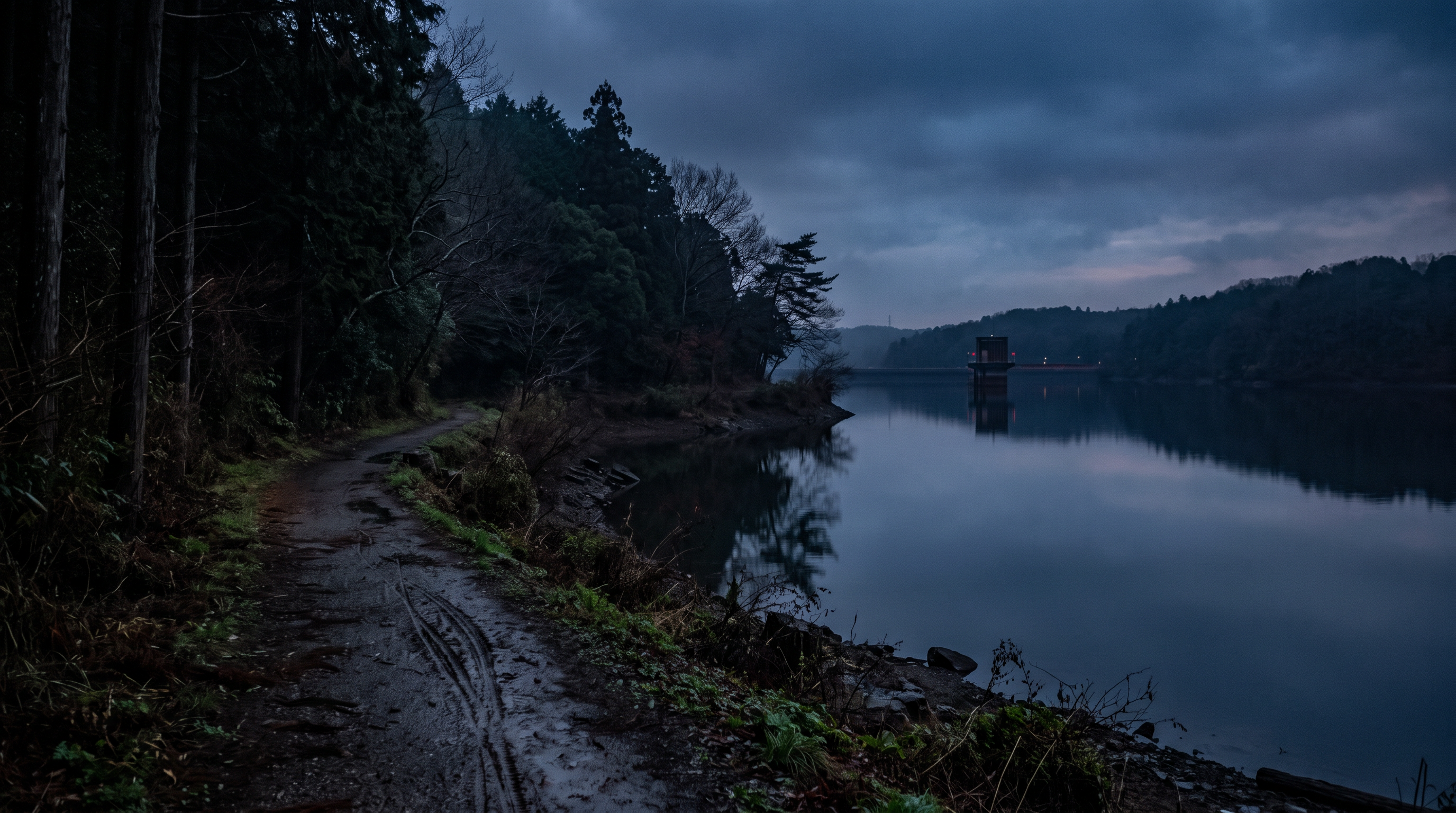
The page containing the rumor states that there is a mound at the end of the Sayama Hills, which extends south of Lake Tama, and that "the end of the mound was a place where elderly people who could not stand and sick people who had collapsed on the road quietly awaited death." It also explains that "around the Genroku era, villagers began to bury the dead at the signal of a monk's gong, and the mound came to be called the Pilgrim's Mound," and further includes a modern anecdotal rumor that "while cycling, the gears suddenly come off or your body becomes heavy."
Source of the rumor and date of verification
I checked the Tamako page of the National Haunted Map as an example of secondary publication. It lists a series of rumors about Oosuji-bashi, Gyōninzuka, a monk from the Genroku period, and strange occurrences while driving, but there are no links to the original source names of the legends or official excavation records. Therefore, although the publicly available content of the rumors can be confirmed, the original source and historical origin remain unknown.
- Nationwide Haunted Map "Tama Lake"(Verification Date: 2026-09-20) — The article includes rumors about the main area being a mountain where elderly people were abandoned, a monk and a gong from the Genroku period, the origin of the Gyōninzuka (pilgrim's mound), and unusual sensations in gears and body sensations while cycling.
Things that could be confirmed from official and primary source materials
The Tokyo Metropolitan Waterworks Bureau refers to Lake Tama as the Murayama Upper and Lower Reservoirs. It states that these are earth dam-type reservoirs built using the Sayama Hills, with the Murayama Upper Reservoir completed in March 1924 and the Murayama Lower Reservoir in March 1927. It also describes them as water supply facilities that store water from the Tama River system and guide it to the water treatment plant. The official website I checked does not contain any mention of the Oosujihashi old woman abandonment site, the Genroku period monk, the Gyōninzuka (pilgrim's mound), or any strange occurrences while traveling.
- Tokyo Metropolitan Waterworks Bureau "Murayama-Yamaguchi Reservoir (Tama Lake and Sayama Lake)"(Confirmed on 2026-09-20) — Tamako is commonly known as the Murayama Upper and Lower Reservoirs, and it is explained that they are earth dam-type water reservoirs utilizing the Sayama Hills, with the Upper Reservoir completed in 1924 (Taisho 13) and the Lower Reservoir in 1927 (Showa 2).
Points of agreement/contradictions
Official documents confirm that Lake Tama is not a natural lake, but rather two earth dam-type reservoirs constructed for water supply purposes. However, the purpose of the main area at the center of the rumors—the origin of the name of the Gyōninzuka (pilgrim's mound)—the story of the monk and the gong, and the strange occurrences during cycling cannot be directly compared with these documents. Even if the history of the facilities is clear, it does not provide evidence to support alternative traditions or sensory experiences.
| The rumored atomic claim | Matching results | reason | Corresponding documents |
|---|---|---|---|
| In essence, it was a mountain where elderly people who could no longer stand and sick people who had collapsed from exhaustion would quietly await death. | Unconfirmed | The Tokyo Metropolitan Waterworks Bureau's facility records do not contain any records related to Oosuji-bashi or Ubasute, and we were unable to obtain any independent documents that directly confirm the same location and purpose. | No official data available for direct comparison. |
| During the Genroku era, villagers began burying the dead at the signal of a monk's gong, and the mound came to be called a "gyōnin-zuka" (pilgrim's mound). | Unconfirmed | The official documents I checked deal with the structure and operation of the reservoir, but do not include any descriptions that allow for a comparison of the naming history of the monks, gongs, burials, and ascetic mounds. | No official data available for direct comparison. |
| While cycling, the gears suddenly come loose or your body feels heavy. | Unconfirmed | There are no records showing individual operating conditions or equipment status, and the Tokyo Metropolitan Waterworks Bureau's publicly available documents do not contain any information that can verify a similar phenomenon. | No official data available for direct comparison. |
Alternative interpretation
The undulating terrain of the Sayama Hills, the long loop course, the darkness, the road surface conditions, the condition of the bicycle, and fatigue can all be perceived as gear malfunctions or physical heaviness. However, since we cannot confirm the equipment, weather, and riding conditions at the time of each individual experience, we cannot pinpoint which factor was responsible.
Scope and limitations of the investigation
The Tokyo Metropolitan Waterworks Bureau's website contains facility information explaining the structure, use, and completion date of the reservoir, and is not a research report on local folklore. This limited investigation was unable to directly obtain independent municipal or public archive materials corresponding to the rumors regarding Oosugi-bashi and Gyōninzuka, and therefore could not determine the validity of the legend.
Verification result: Unmeasurable
While we were able to confirm the nature of the facilities at Tama Lake and their completion date, these do not directly support or deny the rumors about it being a mountain where elderly people were abandoned, a monk's bell, a mound for ascetics, or a strange occurrence while driving. Even after re-examining the specific claims included in the rumors we had obtained with official records, no comparison was possible. Therefore, instead of considering the facility's existence as a partial match, we classified it as "unmeasurable."
Document Quality Score
| Source transparency | 25/30 | While the rumor page and the Tokyo Metropolitan Waterworks Bureau page can be directly verified, there is a lack of clues to trace back to the original source of the legend. |
|---|---|---|
| Historical and spatial context | 20/25 | The reservoir's type, purpose, and completion date are clear, but the historical records of Oosugi and Gyōninzuka cannot be confirmed. |
| Safety information | 15/20 | While the locations of water supply facilities and available viewpoints are known, information regarding restrictions on individual routes is limited. |
| Newness of information | 12/15 | I checked the Tokyo Metropolitan Waterworks Bureau's current facilities page, but the most recent update date for the rumor page is 2024. |
| Transparency of the source of rumors | 8/10 | While the specific text of the tradition is readable, the name of the original source, the person who compiled it, and the date of compilation are not indicated. |
| total | 80/100 | This is the overall quality of the materials. It does not represent the degree of truthfulness or danger associated with the supernatural phenomena. |
Safety information and maps
Lake Tama is still managed as a reservoir for water supply. Please do not enter water supply land or restricted areas, and view the lake from the publicly accessible plaza on the embankment or public roads. When exploring the lake, hills, or long circular routes, please consider the time of day, weather, and your physical condition, and avoid exploring alone at night.
Map location: Displays the coordinates of the center of the water surface of Murayama Lower Reservoir.
What I learned by crossing locations
At the Hachioji Castle ruins, we were able to compare the date of its fall, the attacking army, and the whereabouts of the castle lord with official records, but we could not find any descriptions of bloodshed related to the waterfall. At Ojagaike Pond, we were able to confirm that legends about love and mother-in-law/daughter-in-law relationships have been collected as local historical materials, but the self-immolation, transformation into a white snake, and nighttime strange occurrences are separate issues. At Tama Lake, although the structure of the reservoir and the completion date are clear, we could not find any official records that could be used to match the legend of abandoning the elderly, which is at the center of the rumors, or the physical sensations described. What all three locations have in common is that even if historical facts and legendary materials exist, that alone does not necessarily support the current strange occurrences.
summary
In this comparison, we determined that Hachioji Castle ruins and Ojaga Pond were "partially identical," while Tama Lake was "unmeasurable." The similarity between the former two lies in the fact that records and legends of the castle's fall are included in local historical documents, not in the appearance of spirits or supernatural phenomena. While we were able to confirm the history of Tama Lake as a facility, we could not directly compare it with the rumored origin of the Gyōninzuka mound or any strange occurrences while driving. It is important to distinguish between the background of rumors and the actual existence of strange occurrences.
FAQ
Does "partially matching" mean that the paranormal phenomena are factual?
No. Partial matches indicate that only certain aspects of the rumor—such as the time period, the whereabouts of the people involved, or whether the legend is recorded—match those of independent sources. This is distinct from confirming the supernatural phenomenon itself.
If there's no mention of supernatural phenomena on the official page, does that mean it's inconsistent?
The mere absence of information will not be considered a discrepancy. Because the purpose and scope of official documents may differ, if the opposite facts are not explicitly stated, it will be treated as unconfirmed and, if necessary, marked as unmeasurable.
May I verify the rumors in person?
Please avoid nighttime visits, trespassing into managed areas, street parking, and noisy inspections. Prioritize the administrator's guidance regarding opening hours and walking trails, and be aware of weather conditions, wildlife, and potential hazards near water and on mountain trails.
If the data is updated, will the assessment change?
The assessment may change if the content of the official records and rumor pages used for comparison is updated, and if more materials directly support or refute the claims become available. This article was last reviewed on September 20, 2026.
How to read this article and safety precautions
" [2026 Latest] Top 3 Ranking of Ghostly Rumors Remaining in Forests and Waterfronts of Southern Kanto This is an article compiled by the Horror Tales File editorial team as a story, based on publicly available information, rumors circulating in the community, and information submitted by readers. It does not definitively state the authenticity of paranormal phenomena.
- We do not recommend visiting restricted areas, private property, abandoned buildings, or dangerous locations at night.
- If you go to the site, always prioritize compliance with laws and regulations, instructions from facility managers, and consideration for nearby residents.
- You can submit personal experiences, correction requests, and deletion requests through the "Personal Experiences/Information Submission" or "Contact Us" sections.
View editorial policy / Please share your experiences and information here. / inquiry