This study investigates ghost stories surrounding castle ruins and old tunnels in Tokyo, focusing on three locations: Hachioji Castle ruins, the old Fukiage Tunnel, and the old Komine Tunnel. External web pages listing the rumors and official documents from the local government and Tokyo Metropolitan Government were directly obtained, comparing each claim regarding the year of the castle's fall, the age of the facilities, and rumors about a young girl. The ranking is based on the degree to which the information could be traced, not on the level of fear, and is not intended as a guide encouraging visitors to the sites.
Survey methods and evaluation criteria
External rumors were used as evidence of what was being said, while documents from local governments and road management were used as independent sources to verify historical and administrative facts. Agreement means all claims are supported, partial agreement means a combination of support and unconfirmed information, disagreement means a direct contradiction, and immeasurable means direct comparison is not possible. New facts are only included if a comparative judgment is not possible and important matters not mentioned in the rumors are confirmed in official documents. The quality of the documents is scored out of 100 points, with source transparency at 30, history/space at 25, safety at 20, novelty at 15, and rumor source transparency at 10, and does not represent the truthfulness of the supernatural occurrences.
| Rank | point | The main points of the rumor | judgement | Document quality |
|---|---|---|---|---|
| 1 | Hachioji Castle Ruins | The page containing the rumor explains that Hachioji Castle ruins "fell in 1590 (Tensho 18) after being attacked by the forces of Maeda Toshiie and Uesugi Kagekatsu," and states that "the castle lord, Hojo Ujiteru, took refuge in Odawara when the castle fell..." | Partial match | 92/100 |
| 2 | Old Fukiage Tunnel | Weekly Women's PRIME explains that there are three generations of Fukiage Tunnels in Ome City, and that the oldest Fukiage Tunnel was the first Fukiage Tunnel, a hand-dug brick tunnel built in 1904... | Partial match | 88/100 |
| 3 | Old Komine Tunnel | Tama Sanpo introduces the old Komine Tunnel as a Taisho-era tunnel located on the old road of Komine Pass, and includes in its title the rumor that "the ghost of a girl with no wrists appears there." The main text mentions its opening in 1916 (Taisho 5) and its darkening... | unmeasurable | 76/100 |
1st Place: Hachioji Castle Ruins | Partial Match (92 points)
The rumored details
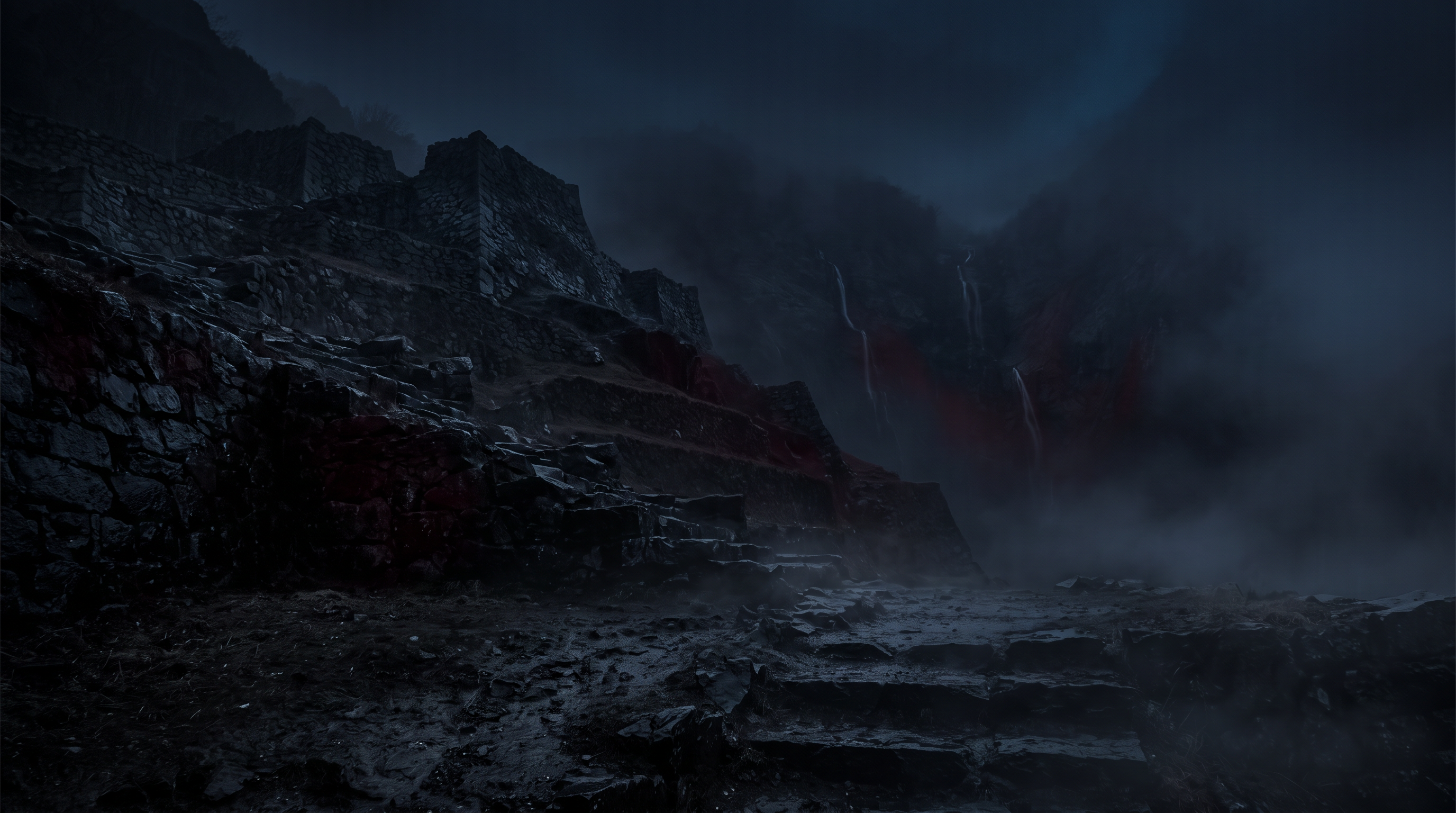
The page containing the rumor explains that Hachioji Castle ruins "fell in 1590 (Tensho 18) after being attacked by the forces of Maeda Toshiie and Uesugi Kagekatsu," and that "the castle lord, Hojo Ujiteru, was besieged in Odawara at the time of the castle's fall." Furthermore, it recounts that the women inside the castle committed suicide by throwing themselves into the Goshuden Waterfall, and that "the water of the river flowing from the Goshuden Waterfall turned red with blood," linking this to the rumor that the ghosts of these women appear there.
Source of the rumor and date of verification
The individual page for Hachioji Castle Ruins on the National Haunted Map was directly retrieved on September 28, 2026. This is a secondary publication example compiling the history of the castle's fall and narratives related to the waterfall, but the original sources for the stories of the woman's sighting and the waterfall's color are not shown.
- Nationwide Haunted Map: Hachioji Castle Ruins(Confirmed on 2026-09-28) — In 1590 (Tensho 18), it was attacked by the Toyotomi army led by Uesugi Kagekatsu, Maeda Toshiie, and Sanada Masayuki. It is said that the water of the river flowing from the Goshuden Waterfall was stained red with blood.
Things that could be confirmed from official and primary source materials
The official Hachioji City website describes the Hachioji Castle ruins as a mountain castle built by Hojo Ujiteru. It clearly states that the castle fell on June 23, 1590, as part of Toyotomi Hideyoshi's conquest of the Kanto region, when it was attacked by the forces of Maeda Toshiie and Uesugi Kagekatsu, and that Ujiteru was besieged in Odawara at the time. However, this official website does not confirm that women committed suicide by stabbing themselves in the throat, threw themselves into the Goshuden Waterfall, or that the river turned red with blood.
- Hachioji City Official Website "Hachioji Castle Ruins"(Confirmed on 2026-09-28) — On June 23, 1590 (Tensho 18), as part of Toyotomi Hideyoshi's conquest of the Kanto region, the castle was attacked and fell to the forces of Maeda Toshiie and Uesugi Kagekatsu.
Points of agreement/contradictions
The year the castle fell, the central figures of the attack, and the rumor that the castle lord was in Odawara all align with records from Hachioji City. However, the specific details of the women's final moments and the discoloration of the river cannot be corroborated within the scope of the official website's description. It is necessary to distinguish between the battle that can be confirmed as historical fact and the story of the waterfall that has been told in later generations.
| The rumored atomic claim | Matching results | reason | Corresponding documents |
|---|---|---|---|
| In 1590 (Tensho 18), it was attacked and fell to the forces of Maeda Toshiie and Uesugi Kagekatsu. | support | Hachioji City clearly states that the castle fell on June 23, 1590, during an attack by the forces of Maeda Toshiie and Uesugi Kagekatsu, and the subject, date, and event all match. | Hachioji City Official Website "Hachioji Castle Ruins" |
| The castle lord, Hojo Ujiteru, was besieged in Odawara when the castle fell. | support | The official Hachioji City website clearly states that Hojo Ujiteru was holed up in Odawara when the castle fell, and the location of the person matches. | Hachioji City Official Website "Hachioji Castle Ruins" |
| The water of the river flowing from the main palace waterfall was stained red with blood. | Unconfirmed | The city's official website, which we checked, did not contain any record of the waterfall water turning red with blood, and we were unable to secure any independent data that would allow for a direct comparison of the same phenomenon. | No official data available for direct comparison. |
Alternative interpretation
The significant historical event of the castle's fall in 1590 may have been intertwined with the striking geographical feature of the Goshuden Waterfall and later legends. The stories of the female spirit and the color of the river that are told today cannot be derived solely from the existence of historical facts.
Scope and limitations of the investigation
The sources examined this time were the text in the National Haunted Site Map and the Hachioji City Historical Site Guide. The city's guide focuses on the castle's history and facility use, and does not include the first appearance of the waterfall legend or a complete record of all the damage. The map shows a representative point of the large castle ruins and does not indicate the waterfall or the entrance.
Verification results: Partial match
The comparable claims that the castle fell on June 23, 1590, that it was attacked by the forces of Maeda Toshiie and Uesugi Kagekatsu, and that Hojo Ujiteru was in Odawara, were supported by official records. On the other hand, the claims about the women's method of suicide, such as jumping into a waterfall and the river turning red with blood, remain unconfirmed. Because both supported and unconfirmed claims coexist, the scope of the analysis was limited to the historical facts, resulting in a "partial agreement."
Document Quality Score
| Source transparency | 28/30 | The rumor page and the official Hachioji City page are published with separate URLs, allowing you to track the location of the texts you are comparing. |
|---|---|---|
| Historical and spatial context | 24/25 | Official documents provide concrete details about the castle's fall, including the attacking army, the lord's whereabouts, and the castle's layout. |
| Safety information | 18/20 | The official website provides specific information regarding the prohibition of nighttime visits, wildlife, undeveloped areas, and parking hours. |
| Newness of information | 13/15 | The Hachioji City official website was updated on September 1, 2026, and includes the latest facility status and cautionary information. |
| Transparency of the source of rumors | 9/10 | While the rumor's text and update information can be found, the original source of the waterfall legend is not presented. |
| total | 92/100 | This is the overall quality of the materials. It does not represent the degree of truthfulness or danger associated with the supernatural phenomena. |
Safety information and maps
Hachioji City strictly prohibits visits at night and late at night, and advises against entering unmaintained areas. Due to reports of black bear sightings, please stay on the designated walking paths even during opening hours and check the latest information provided by the management.
Map location: Displays the coordinates of the central feature of the castle ruins.
2nd Place: Old Old Fukiage Tunnel | Partial Match (88 points)
The rumored details
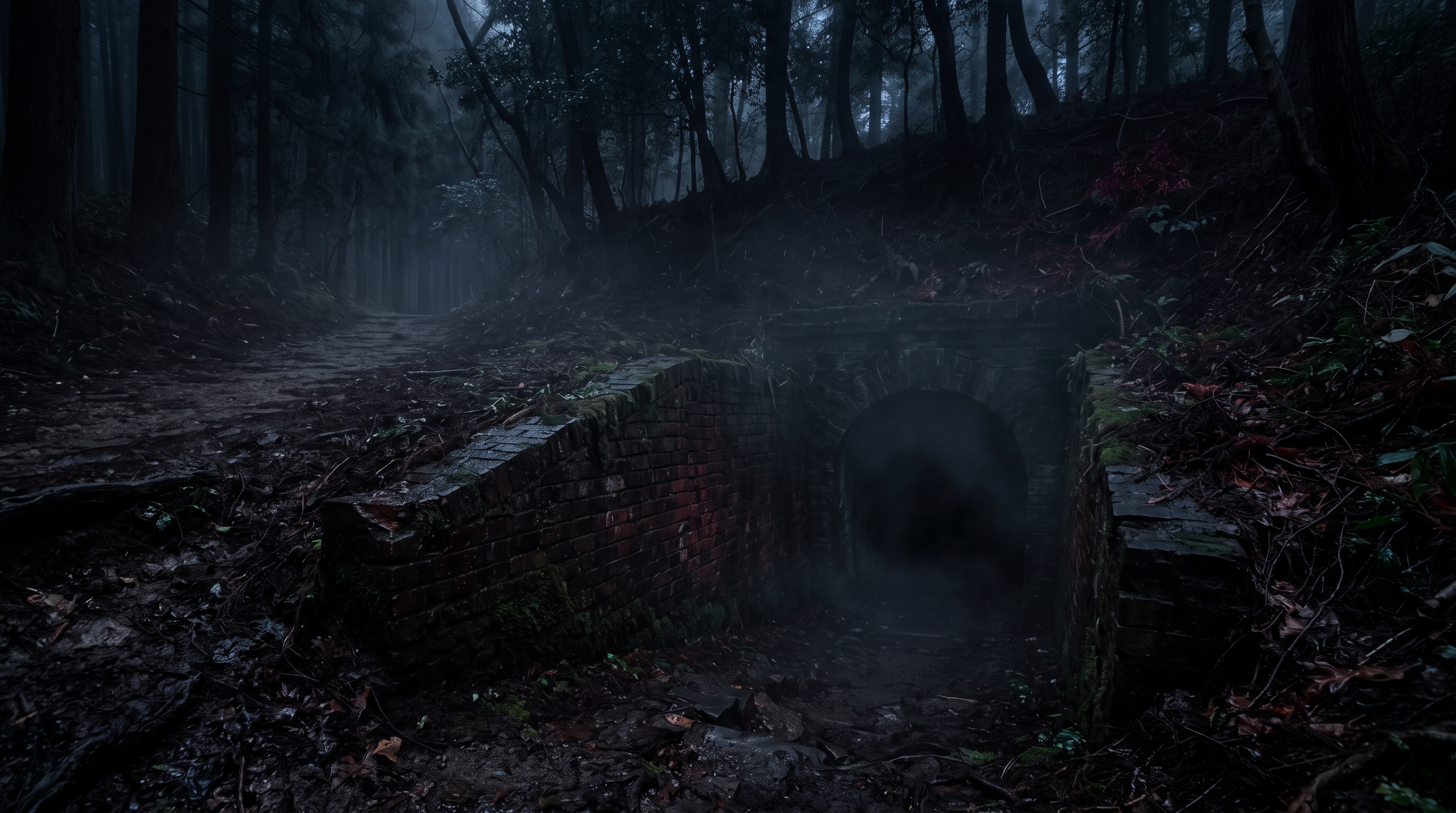
Weekly Women's PRIME explains that there are three generations of Fukiage Tunnels in Ome City, noting that the oldest Fukiage Tunnel was the first Fukiage Tunnel, a hand-dug brick tunnel built in 1904. It also includes hearsay as ghost stories, such as "the sound of a baby crying can be heard" and "a ghost in a white kimono appears." The magazine distinguishes between the chronological order of historical facilities and accounts of voices and figures whose occurrences cannot be determined.
Source of the rumor and date of verification
The source of the rumor is the April 4, 2021 issue of Shukan Josei PRIME, titled "Thorough Investigation of the Most Terrifying Haunted Spot: The Crying of a Young Child and Sad Memories Heard at 'Fukiage Tunnel'." While it is a secondary publication including on-site reporting by the reporter, statements from local residents, writers, and ghost storytellers, the original record of the white-robed statue and the crying sounds has not been identified.
- Weekly Women's PRIME: "Thorough coverage of the most terrifying haunted spot: 'Fukiage Tunnel'"(Confirmed on 2026-09-28) — In 1904, the first tunnel, the "Old Old Fukiage Tunnel" (hereinafter referred to as "Old Old"), was constructed using hand-excavated brickwork.
Things that could be confirmed from official and primary source materials
Local history materials from Nariki Elementary School, made public by Ome City, refer to the facility corresponding to the old Fukiage Tunnel as the "First Fukiage Tunnel (Meiji Tunnel)" and explain that it was the first road tunnel in Tokyo used by people, horses, and carts. It records that in 1898, the Tokyo Prefecture approved a five-year continuous budget, and that the construction was supported by land donations and the labor of local residents. However, these materials do not contain any observations of ghost stories involving voices or figures.
- Ome City, Nariki Past and Present: "Fukiage Tunnel, Part 2"(Confirmed on 2026-09-28) — As previously mentioned, the original Fukiage Tunnel (Meiji Tunnel) was Tokyo's first "road tunnel (a road for people, horses, and carts)."
Points of agreement/contradictions
The description of it being the "first generation" in the external article corresponds to the name of the same facility in Ome City. However, the city records do not directly verify the completion year of 1904, the sound of a baby crying, or the white figure. The explanation is only supported in terms of the facility's generational relationship, and the strange occurrences remain unconfirmed.
| The rumored atomic claim | Matching results | reason | Corresponding documents |
|---|---|---|---|
| The old Fukiage Tunnel was the first Fukiage Tunnel. | support | Local historical documents in Ome City refer to the same facility as the first Fukiage Tunnel (Meiji Tunnel), supporting the generational relationship. | Ome City, Nariki Past and Present: "Fukiage Tunnel, Part 2" |
| I can hear a baby crying. | Unconfirmed | The city's construction history does not include the date and time of the voice observation or recordings, making it impossible to directly verify this anecdote regarding the same subject. | No official data available for direct comparison. |
| A ghost in a white kimono appears. | Unconfirmed | While the media reports it as hearsay, city records do not document whether or not there was an eyewitness account, making it impossible to support or refute it. | No official data available for direct comparison. |
Alternative interpretation
Confusing the three generations of corridors that share the same name, Fukiage, could lead to misinterpreting a different facility as belonging to the first one. While it's conceivable that the reverberation of the dark corridor and surrounding sounds might influence how they are heard, the lack of measurement data makes it impossible to definitively conclude that the voices are the cause.
Scope and limitations of the investigation
The local history of Ome City describes the construction circumstances and does not address the dates of the voices or sightings. The interview articles also lack any documents that trace the initial appearance of each personal account, and the completion year of 1904 has not been independently confirmed from the official documents used in this study. The original tunnel and the separate tunnel built in 1953 were distinguished on the map.
Verification results: Partial match
The specific historical information that the old-old Fukiage Tunnel was the first Fukiage Tunnel matches the designation in the local history published by the city. However, there are no independent observational records of the voices and appearances in the interview articles, and these cannot be confirmed from the same source. Since there is both support and unconfirmed information, we will consider it a partial agreement limited to the generational relationship of the facilities.
Document Quality Score
| Source transparency | 29/30 | This is because we can directly obtain investigative gossip articles and local historical materials from Ome City, allowing us to separate and track historical claims from ghost stories. |
|---|---|---|
| Historical and spatial context | 25/25 | This is because it allows us to concretely examine the history of local transportation, including its position as the first road tunnel, its budget, land donation, and the labor of local residents. |
| Safety information | 15/20 | While the rumored article mentions the closure status, it does not include the latest official announcement detailing the current management status. |
| Newness of information | 11/15 | The official documents were released in 2025 and have been re-obtained, but the rumor article was published in 2021, so there is a time lag between the information and the current situation. |
| Transparency of the source of rumors | 8/10 | While the subjects of the interviews and the publication dates can be confirmed, the original source materials and the dates of the experiences for each ghost story have not been identified. |
| total | 88/100 | This is the overall quality of the materials. It does not represent the degree of truthfulness or danger associated with the supernatural phenomena. |
Safety information and maps
Rumor articles as of 2021 state that the old Fukiage Tunnel is completely closed. Prioritize the fences, doors, and administrator signs at the site, and do not enter through damaged areas or trespass on private property. The closure status may change, so please check from public roads rather than assuming you will visit.
Map location: The center point of the linear feature of the Fukiage Tunnel, built in 1904, on OpenStreetMap. This is separate from the adjacent Fukiage Tunnel, built in 1953.
Check the area around the old Fukiage Tunnel on Google Maps.
3rd Place: Old Komine Tunnel | Measurement Undetermined (76 points)
The rumored details
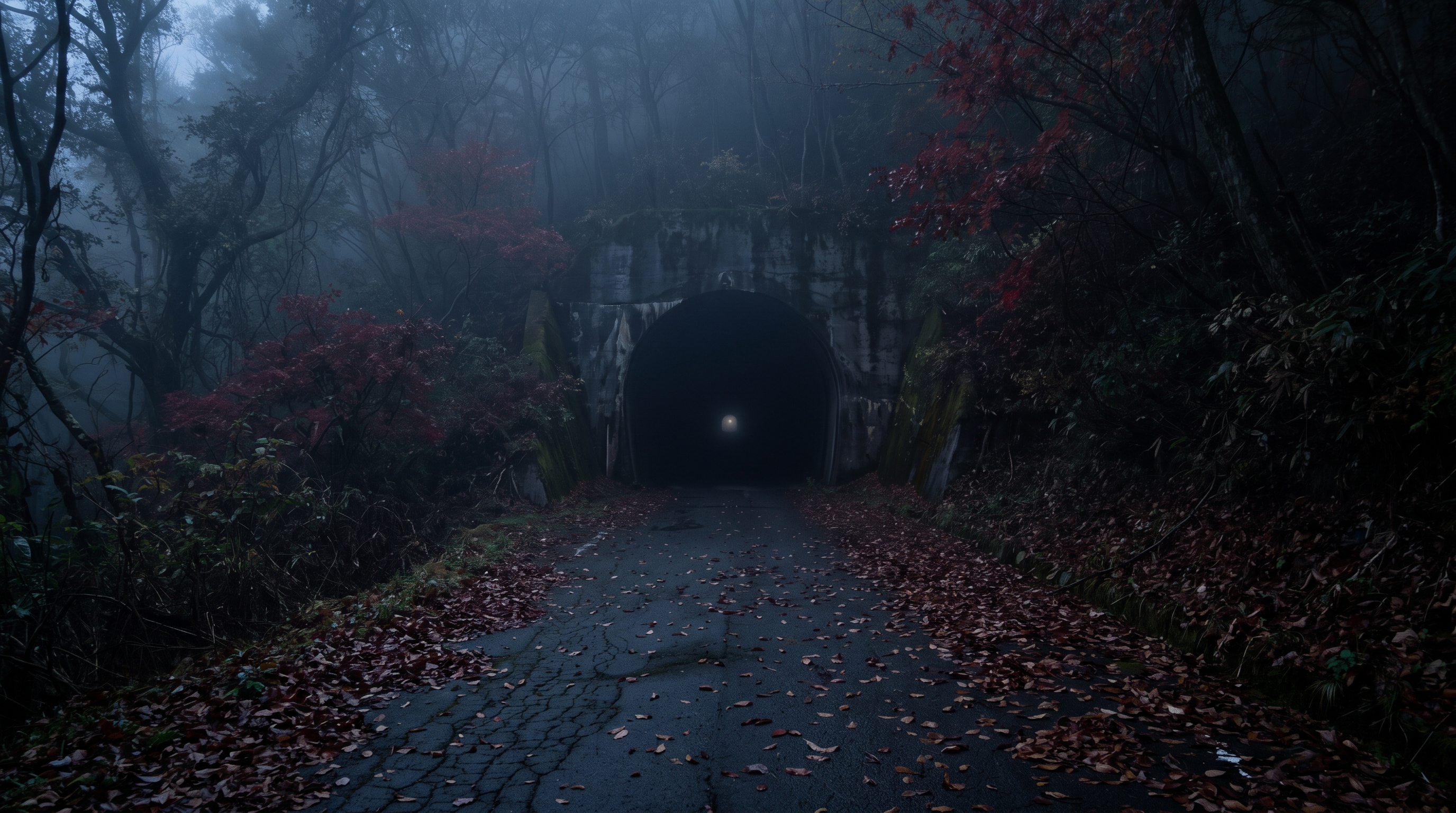
Tama Sanpo introduces the old Komine Tunnel as a Taisho-era tunnel located on the old road of Komine Pass, and includes in its title the rumor that "the ghost of a girl with no wrists appears there." The text also describes its opening in 1916 (Taisho 5) and the author's impressions of walking along the dark old road. However, the original story of the girl's statue and the date of its occurrence are not given, so it is necessary to read the on-site impressions and the verifiable road history separately.
Source of the rumor and date of verification
The source of the rumor is the Tama Sanpo "Old Komine Tunnel/Komine Pass" article, published on February 7, 2022, and updated on October 9, 2023. This is a secondary publication that includes a record of walking around the area and an analysis of past news reports. It mentions a local newspaper column as the first appearance of the statue of the girl, but does not provide the full text of the column or the relevant page of the issue.
- Tama Walk: "Old Komine Tunnel / Komine Pass"(Confirmed on 2026-09-28) — [Old Komine Tunnel/Komine Pass] Walking through the tunnel rumored to be haunted by the ghost of a girl with no wrists.
Things that could be confirmed from official and primary source materials
The Tokyo Metropolitan Government Bureau of Construction's post-project evaluation report for the comprehensive social infrastructure development plan includes "(City) Itsukaichi Route 662 (former Komine Tunnel)" in Akiruno City in its list of road projects, describing the project as "tunnel inspection." This confirms the administrative status of the former Komine Tunnel as a subject of inspection for city roads. However, this list does not cover the year of opening, the statue of the girl, or the process by which the eyewitness accounts came to be.
- Tokyo Metropolitan Government Bureau of Construction, "Post-Evaluation Report of Comprehensive Social Infrastructure Development Plan"(Confirmed on 2026-09-28) — Tunnel inspection of Route 662 (former Komine Tunnel) in Itsukaichi, Akiruno City
Points of agreement/contradictions
The Tokyo Metropolitan Government's post-construction evaluation report does not provide any records that can be directly compared to the walking article's date of opening in 1916 (Taisho 5) and the girl's eyewitness account. The fact that the name "Old Komine Tunnel" appears in official documents is useful for identifying the subject, but it should not be used to determine the year of construction or to support the supernatural occurrences.
| The rumored atomic claim | Matching results | reason | Corresponding documents |
|---|---|---|---|
| A ghost of a girl with no wrists appears. | Unconfirmed | While the travelogue relies on hearsay, the Tokyo Metropolitan Government's road inspection records do not contain any information on the conditions for sightings or observation records. | No official data available for direct comparison. |
| Opened in 1916 (Taisho 5). | Unconfirmed | The Tokyo Metropolitan Government's post-evaluation report only lists the names of the inspected areas, making it impossible to independently verify the year of opening. | No official data available for direct comparison. |
Alternative interpretation
The darkness and lack of lighting along the old road may have intensified the sense of dread, potentially making it the setting for the later legend of the statue of the girl. However, there are no measurements or comparative testimonies to determine whether specific sightings were illusions, and records of city road inspections do not explain the origin of the rumor.
Scope and limitations of the investigation
The metropolitan government's post-construction evaluation report is a list of construction and inspections, not a tunnel completion ledger or a record of folklore. The official completion documents that independently support the Taisho 5 (1916) opening mentioned in the walking article, the first appearance of the girl statue, and dated observation records cannot be confirmed in the materials acquired this time.
Verification result: Unmeasurable
Regarding the two specific claims—the image of the girl and the opening in 1916 (Taisho 5)—the official documents in this study offer neither direct support nor clear contradictions. The mere fact that the old Komine Tunnel is listed as an area subject to inspection by the city roads is insufficient to verify the origin of the rumor or the year of its opening, therefore it was deemed impossible to determine.
Document Quality Score
| Source transparency | 27/30 | I was able to obtain local articles and documents from the Tokyo Metropolitan Government Bureau of Construction directly, but I have not yet obtained the original newspaper article and primary records of the incident. |
|---|---|---|
| Historical and spatial context | 18/25 | While the city road number and the fact that it is subject to inspection can be confirmed, the construction date and the history of its conversion to an old road cannot be read from official documents. |
| Safety information | 14/20 | The rumors page mentions pedestrian and vehicle restrictions, but we haven't yet obtained a dedicated page showing current traffic restrictions. |
| Newness of information | 9/15 | The documents have been re-obtained, but the rumor article was updated in 2023, so the gate and lighting conditions at the site may have changed. |
| Transparency of the source of rumors | 8/10 | While there are observations from the field and considerations regarding rumor formation, the relevant local newspaper articles and the first appearance of the statue of the girl are not presented. |
| total | 76/100 | This is the overall quality of the materials. It does not represent the degree of truthfulness or danger associated with the supernatural phenomena. |
Safety information and maps
The rumor page describes the old road as a pedestrian-only route, but regulations and construction may change. Prioritize local gates and signs from the authorities, obey vehicle restrictions, and avoid walking alone at night. Be careful of falls and getting lost in areas with fallen leaves, moss, dark places, and steep slopes.
Map location: These are the representative coordinates of the tunnel alignment on the pedestrian path, returned as Komine Tunnel in Nominatim.
What I learned by crossing locations
At the Hachioji Castle ruins, the historical claim that the castle fell in 1590 aligns with city records, but the legend about the waterfall's color is a separate issue. At the former Fukiage, the generational relationship of the facility, the first generation, can be confirmed in the city's local history, but there are no records of voices or appearances. At the former Komine, although the target can be identified in the metropolitan road inspection list, there is no material to directly compare the opening year or the statue of the girl. What all three locations have in common is that they do not treat historical facts, identification of road facilities, and experiences of ghost stories as the same evidence.
summary
The Hachioji Castle ruins and the old Fukiage Tunnel were partially confirmed as having some of the specific historical and facility claims made in external articles supported by official documents. However, this did not involve any verification of the waterfall's color or the sound of crying. The old Komine Tunnel is clearly subject to inspection by the city road authorities, but there is no direct corroborating evidence regarding the statue of the girl and its opening year, making it impossible to determine. If the original story or completion records can be confirmed, the judgment will be reviewed on a claim-by-claim basis.
FAQ
If there was a partial match, did that also confirm the existence of paranormal phenomena?
No. Only the information regarding the facilities—the year of the fall of Hachioji Castle ruins and the first generation of the old Fukiage Tunnel—was supported. The rumors about the waterfall's color and the sounds it made remain unconfirmed.
Is the Google Maps link for the old tunnel a guide to the location?
No. The coordinates on the map are approximate points and do not indicate right of passage or entry permits. Close signs and the latest information from the administrator take precedence.
What happens if new documents are found?
If we can obtain the original source of the ghost story, contemporary records, and completion ledgers, we will re-examine the current unconfirmed claims, limiting them to the same subject and date.
How to read this article and safety precautions
" [2026 Latest] Top 3 Ranking of Paranormal Rumors Related to Abandoned Buildings in Tokyo This is an article compiled by the Horror Tales File editorial team as a story, based on publicly available information, rumors circulating in the community, and information submitted by readers. It does not definitively state the authenticity of paranormal phenomena.
- We do not recommend visiting restricted areas, private property, abandoned buildings, or dangerous locations at night.
- If you go to the site, always prioritize compliance with laws and regulations, instructions from facility managers, and consideration for nearby residents.
- You can submit personal experiences, correction requests, and deletion requests through the "Personal Experiences/Information Submission" or "Contact Us" sections.
View editorial policy / Please share your experiences and information here. / inquiry