The three locations in Fukushima offer different chapters to read, each focusing on a different aspect: a photograph of a castle, the sounds of a pond and park facilities, and the history of the castle's fall and the story of chrysanthemum dolls. Each chapter separates the confirmed locations and background from rumors where records are lacking.
A detailed comparison is compiled in a single article covering all three locations. The selection criteria below are merely guidelines for reading the article and do not represent a route for exploring the locations.
Comparison article of three locations
This guide is based on existing publicly available comparison articles and does not indicate that the official documents mentioned in the articles have been re-examined. The location-specific links also open to the corresponding chapters of the same articles.
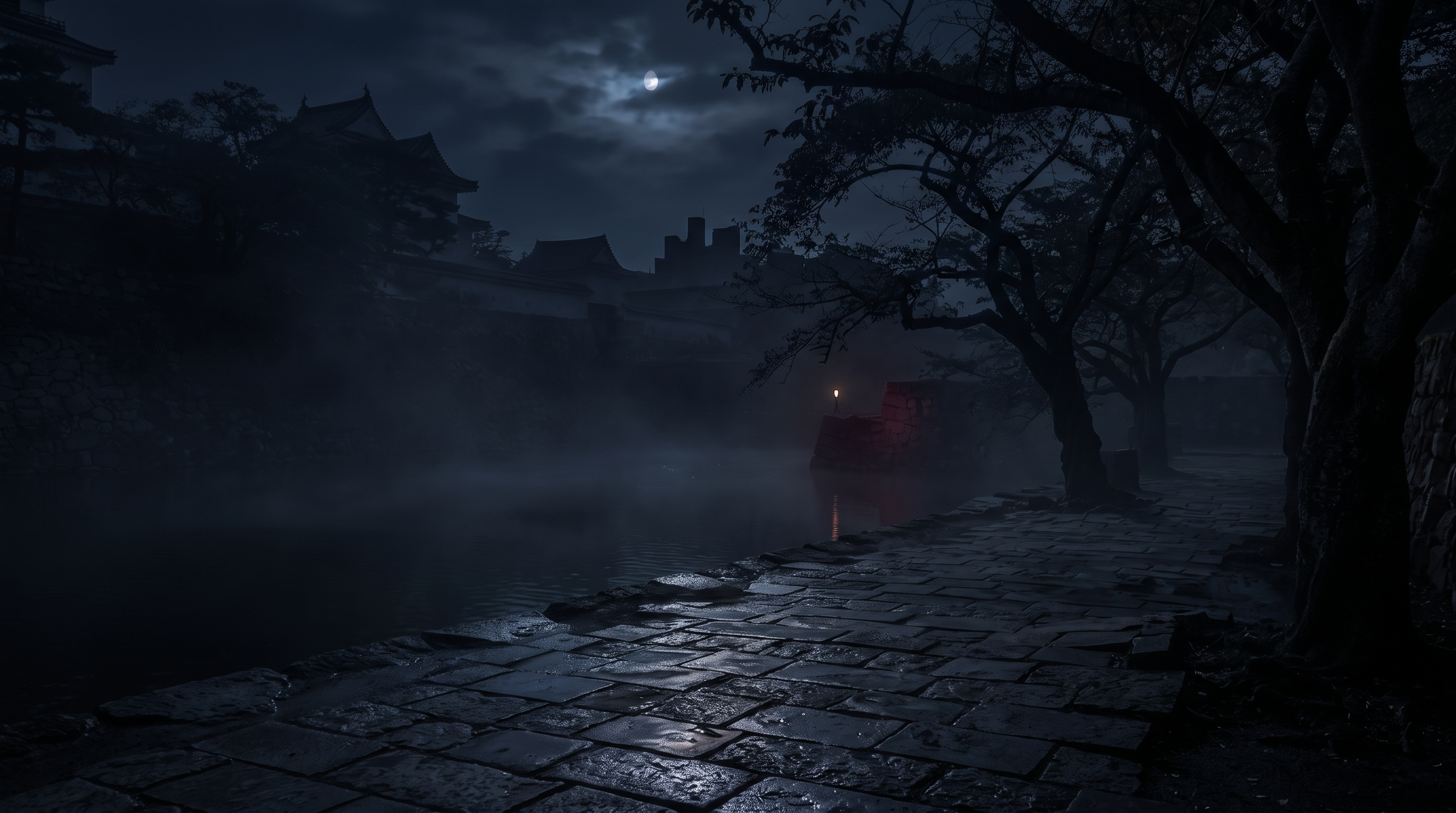
By reading the castle photographs, the sounds of the pond and park facilities, the history of the castle's fall, and the stories of the chrysanthemum dolls, you can distinguish between background information and unconfirmed claims.
These are AI-generated illustrations used in comparison articles. They do not represent evidence of the phenomenon or a reproduction of the actual location.
Highlights of each location
Choose a chapter that interests you from the castle photos, the sounds of the pond and park facilities, the history of the castle's fall, and the story of the chrysanthemum dolls.
Tsuruga Castle Park
The chapter on Tsuruga Castle Park can be read separately, covering the correspondence between the park's name and location, and the rumor that the sky in the photos turns red. The article does not verify the photo data, original eyewitness accounts, or nighttime environmental measurements.
This article is for those who want to understand the difference between knowing the location of a park and being able to analyze the anomalies in a photograph.
Reading a comparison of Tsuruga Castle ParkMidorigaoka Park
In the chapter on Midorigaoka Park, the city compares facilities such as Shin-ike Pond and the natural forest, as described in the city's guide, with accounts of groans from the pond and sightings of samurai. While the facilities can be confirmed, recordings of the sounds and original eyewitness accounts have not been obtained.
This is for people who want to distinguish between facility information such as ponds and toilets and hearsay about sounds and people.
Read a comparison of Midorigaoka ParkNihonmatsu Castle Ruins (Kasumiga Castle Park)
The chapter on the ruins of Nihonmatsu Castle separates the story of the castle's fall during the Boshin War and the commemoration of the boy corps from the stories of the boy's spirit and the relocation of the chrysanthemum dolls. The article does not verify the exhibition management records or the original records of the boy's sighting.
This is for those who want to consider whether the historical fact of the castle's fall provides evidence for the stories of the boy's ghost and the doll.
Read a comparison of Nihonmatsu Castle Ruins (Kasumiga Castle Park)Meaning of the judgment
All three locations show "partial agreement," but the supported areas are not the same. Tsuruga Castle and Midorigaoka correspond to location and facility information, and Nihonmatsu corresponds to the history of the castle's fall, but the movement of spirits, photographs, voices, and dolls remains unconfirmed.
The fact that something is not mentioned in the documents does not mean that it did not happen. The articles are ranked based on the quality of the documents, not on the level of fear or the frequency of the phenomena occurring.
Conditions and Precautions for Reading
The original comparison article's data was verified on October 4, 2026. This is not the date the current facilities and usage conditions were verified.
Please prioritize the latest announcements from the administrator and notices posted on-site, and respect the designated hours and restricted areas. Avoid nighttime activities such as ghost hunting, excessive noise, and trespassing on private property or restricted areas.
Please be considerate of moats, ponds, stone walls, slopes, and exhibits, and avoid nighttime exploration or contact with exhibits. This is not a guide to treat historical sites and places of remembrance as a test of courage.
The map is supplementary to help understand the location of the facility and does not indicate sighting locations, event sites, or access permits. The AI-generated illustrations are also not evidence of on-site records or phenomena.
FAQ
Are there separate articles for each location?
This guide presents a single comparison article covering three locations. The links for each location will open the corresponding section within the same article.
Is the "partial agreement" between the three locations based on the same reasoning?
No. The article includes location and facility information for Tsuruga Castle and Midorigaoka, as well as a description of the fall of Nihonmatsu Castle during the Boshin War. It does not support the idea of supernatural occurrences.
Does the map only show parks?
Because the search is filtered by Fukushima Prefecture and "Parks/Nature," natural locations other than parks are also included. The number of results displayed does not represent the number of parks or articles.
Search using the map and prefecture list.
If you're looking for other topics within Fukushima Prefecture, you can use the map as an index to find articles. The "Parks and Nature" category includes natural locations other than parks. This is not a guide to exploration routes or a haunted house activity.
View parks and nature in Fukushima Prefecture on a map
You can search for articles related to a location by selecting Fukushima Prefecture and "Parks/Nature".
View a list of park articles by prefecture
If you want to search for park articles in other prefectures, you can proceed to a list where you can select by prefecture.