Historical sites and places of worship in the Tokai region are associated with mysterious tales set in caves, grottoes, and ancient tunnels. This article examines the Jinana Fuji-ko Ruins in Fujinomiya, the Sakama Fudo in Seki, and the Meiji Tunnel at Utsunoya Pass, comparing the specific claims of independent source rumored sites with materials from local governments and tourism associations. It's important to note that verifying the structure and history of a site is different from substantiating experiences of voices and shadows.
Survey methods and evaluation criteria
We directly checked independent rumor pages and publicly available documents from local governments and administrators at each location, and compared them with the representative coordinates on the map. If all the same specific claims are supported, it is marked as "Agreement"; if there is a mix of support and unconfirmed claims, it is marked as "Partial Agreement"; if there is a direct contradiction, it is marked as "Disagreement"; if there is insufficient comparative data, it is marked as "Unmeasurable"; and if a direct comparison is not possible and an important fact not found in the rumor is obtained from independent sources, it is marked as "New Fact". Discoveries do not override the judgment of direct comparison. The ranking and 100-point scale are based on the quality of the materials, with source transparency at 30, history/space at 25, safety at 20, novelty at 15, and rumor source transparency at 10, and do not reflect the truthfulness of the fear or supernatural occurrences.
| Rank | point | The main points of the rumor | judgement | Document quality |
|---|---|---|---|---|
| 1 | Hitoana Fujiko Ruins | A paranormal information website features articles about the Jinana Fuji-ko ruins, including rumors that accidents occur when driving through the torii gate, as well as stories of black shadows and laughter. The same article mentions "a group of over 200 stupas," and... | Partial match | 88/100 |
| 2 | Hakama Fudo | The nationwide paranormal map mentions Hakama Fudo, noting that there are numerous candles deep inside the cave of the inner sanctuary, and lists rumors of strong gusts of wind blowing only in the immediate vicinity, and the sound of a baby crying being heard... | Partial match | 77/100 |
| 3 | Utsunoya Pass (Meiji Tunnel) | The nationwide paranormal map states that the Utsunoya Tunnel group, including the Utsunoya Pass (Meiji Tunnel), consists of four tunnels dating from the Meiji, Taisho, Showa, and Heisei periods. The Meiji Tunnel was the first in Japan… | Partial match | 76/100 |
1st place: Hitoana Fujiko ruins | Partial match (88 points)
The rumored details
A paranormal information website features articles about the Jinana Fuji-ko ruins, including rumors that accidents occur when driving through the torii gate, as well as stories of black shadows and laughter. The same article also mentions "more than 200 stone monuments," the legend that it was a training ground for Kakugyo Hasegawa, and that "the lava cave is off-limits (guided tours require reservations)." The site distinguishes between claims that can be compared and those that do not present the accidents and strange occurrences as actual events.
Source of the rumor and date of verification
The source of the rumor is an individual article on the external website "Complete Guide to Haunted Spots in Japan." No primary records of accidents or sightings, individual testimonies, or references to the original publication were found, so it is treated as a secondary publication example. The existence of the published rumor and the occurrence of the event were separated and confirmed.
- The Complete Guide to Haunted Places in Japan: The Jinana Fuji-ko Ruins(Confirmed on 2026-09-27) — Rumors circulate that accidents occur when driving through the torii gate, there are over 200 stone monuments, and guided tours require reservations.
Things that could be confirmed from official and primary source materials
Fujinomiya City describes the Jinana Fuji-ko Ruins as a World Heritage site within the grounds of Jinana Sengen Shrine, documenting the lava cave and 232 stupas. The ascetic practices of Kakugyo Hasegawa are presented as a tradition based on Fuji-ko documents. The city's guide to entering the caves prohibits unauthorized entry, and on days meeting certain conditions, visitors can enter the safety-protected sections with a guide. Fujinomiya City records that Jinana Sengen Shrine was relocated in 1942 due to military land acquisition and rebuilt at its current location in 1954.
- Fujinomiya City - Jinana Fuji-ko Ruins(Confirmed on 2026-09-27) — There are 232 memorial towers within the shrine grounds. In 1942, the surrounding area was requisitioned as military land, so the Jinana Asama Shrine was relocated along with the surrounding residents, and was rebuilt in its current location in 1954.
- Fujinomiya City - Hitotsuna Cave Entry Reservation Information(Confirmed on 2026-09-27) — Partial cave entry is possible with a guide on days when the information center is open. Entry is not permitted without the accompaniment of a local guide.
Points of agreement/contradictions
The rumored "group of over 200 stone monuments" is consistent with the city's record of 232. Kakugyo's ascetic practices can be corroborated not by demonstrable evidence of the act itself, but by the fact that the tradition exists in Fuji-ko documents. The conditional entry into the cave is also consistent with the city's guidance. On the other hand, the causal relationship between accidents and strange occurrences after passing through the torii gate cannot be verified from the official documents presented here.
| The rumored atomic claim | Matching results | reason | Corresponding documents |
|---|---|---|---|
| A group of over 200 stupas | support | Fujinomiya City counts the number of monuments on the temple grounds as 232, directly meeting the rumored range of over 200. | Fujinomiya City - Jinana Fuji-ko Ruins |
| The training ground of Kakugyo Hasegawa | support | The city explains that Fuji-ko documents state that Kakugyo practiced asceticism in Jinana. However, what it supports is the location of the tradition, not concrete evidence of the act itself. | Fujinomiya City - Jinana Fuji-ko Ruins |
| Accidents happen when you drive through a torii gate. | Unconfirmed | There are no records of the accident dated in accordance with the city's explanation of the ruins or guide to entering the cave, and a causal link to passing through the torii gate cannot be compared using independent sources. | No official data available for direct comparison. |
| The lava tubes are off-limits (guided tours require reservations). | support | While the city prohibits unauthorized entry into the cave, it offers guided partial entry on days when the information center is open, which aligns with this conditional explanation. | Fujinomiya City - Hitotsuna Cave Entry Reservation Information |
Alternative interpretation
The monument is described as a memorial, prayer, and commemorative artifact of the Fuji-ko (Fuji pilgrimage group), and its origin cannot be determined solely by its appearance as a tombstone. Although environmental factors can be assumed from the sounds and darkness of the cave, the cause cannot be definitively determined because individual reports have not been reproduced in subsequent investigations.
Scope and limitations of the investigation
The information was compared with rumor articles and the Fujinomiya City archaeological site explanation and cave entry guide; the accident log for the torii gate, the original posts, and timed observation records were not checked. The absence of records of the strange occurrence in official documents does not prove that it will never happen.
Verification results: Partial match
The number of stupas, the legend of Kakugyo's ascetic practices, and the specific claim of conditional entry into the cave are supported by city records. On the other hand, there is no independent evidence of a car accident passing through the torii gate or the appearance of a black shadow, so the partial agreement is limited to physical and institutional elements. The wartime relocation and postwar reconstruction of the shrine are new information and not evidence of supernatural occurrences.
Document Quality Score
| Source transparency | 27/30 | The specific details of the rumor and the Fujinomiya City archaeological site explanation and entry system can be compared on separate pages, leaving only the original documents about the accident. |
|---|---|---|
| Historical and spatial context | 23/25 | In addition to the 232 memorial stupas and the legend of Kakugyo, the wartime relocation and postwar reconstruction can be traced through local government records. |
| Safety information | 18/20 | The city's current guidelines specifically cover requirements such as guided tours, reservations, weather restrictions, and the prohibition of unauthorized entry into the caves. |
| Newness of information | 14/15 | I checked the city's updated guide for 2026, but the rumored accident case lacks a date, time, and primary record. |
| Transparency of the source of rumors | 6/10 | While the page containing the rumor is directly accessible, the original source of the eyewitness account and the original documents about the accident are not provided. |
| total | 88/100 | This is the overall quality of the materials. It does not represent the degree of truthfulness or danger associated with the supernatural phenomena. |
Safety information and maps
Do not enter the cave without permission, and do not cross the fence surrounding the group of stupas. The city will provide information on how to make reservations, the number of participants, and seasonal and weather restrictions for guided tours of the cave on weekends and holidays. Check the latest information on site and visit the site quietly as it is a place of worship.
Map location: The location shown is based on the site of the same name on OpenStreetMap and does not represent the cave entrance itself.
Check the area around the Jinana Fuji-ko Ruins on Google Maps.
2nd place: Sakanma Fudo | Partial match (77 points)
The rumored details
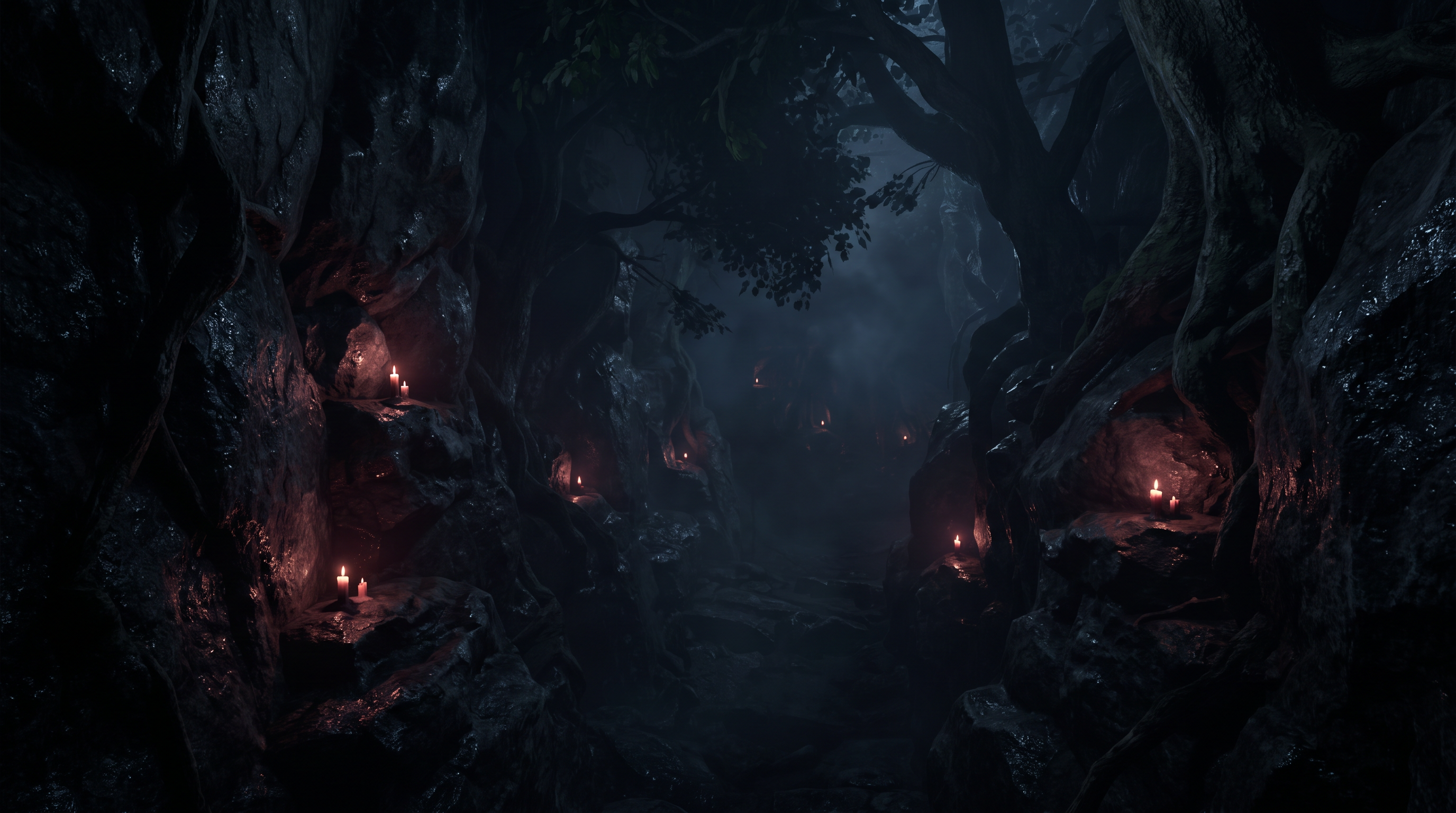
The nationwide paranormal map mentions Hakama Fudo, noting that there are numerous candles deep inside the cave of the inner sanctuary, and lists rumors of strong gusts of wind blowing only in the surrounding area and the sound of a baby crying. The presence of the Mizuko Jizo (guardian deity of aborted fetuses) is also linked to the paranormal stories, but the map does not definitively attribute the cause of the strange occurrences to the people who receive memorial services or the temple's activities. The visible structure and the personal accounts are compared separately.
Source of the rumor and date of verification
The source of the rumors is the individual page for Sakama Fudo on the external posting and aggregation site "National Haunted Map." While there is an update dated August 1, 2024, and votes and comments are present, the initial records and observation methods for each experience cannot be identified. The number of posts is not counted as an independent, verified case.
- National Haunted Map - Hakuma Fudo(Confirmed on 2026-09-27) — Numerous candles are offered as votive offerings in the back of the cave in the inner sanctuary. It is posted that a sudden gust of wind blows only around the person.
Things that could be confirmed from official and primary source materials
The Seki City Tourism Association guides visitors to Sakama Fudōson, located at 891 Sakama, Seki City, Gifu Prefecture, as a historical and cultural site to visit among shrines and temples. The explanation is limited to the fact that it is believed to have been founded in 823 (Kōnin 14), and this is not treated as a confirmed date. The main deity, Fudō Myōō, is enshrined in a natural rock cave, and it is noted that there are numerous candles inside the cave. The surrounding area is maintained as a walking trail, and the usual visiting hours are also provided.
- Seki City Tourism Association / Sakama Fudo-son Temple(Confirmed on 2026-09-27) — The principal image, Fudo Myoo, is enshrined in a natural rock cave, and countless candles flicker inside the cave, creating a mystical atmosphere in combination with the surrounding tranquility.
Points of agreement/contradictions
The rumor that "there are many candles deep inside the cave of the inner sanctuary" aligns with the tourist association's record of candles inside the cave. However, the facility guide does not include reports of measurements of gusts of wind or baby cries. It does not extend the existence of the cave and objects related to memorial services to support the origin of spirits or phenomena.
| The rumored atomic claim | Matching results | reason | Corresponding documents |
|---|---|---|---|
| In the depths of the cave in the inner sanctuary, there are many candles. | support | The Seki City Tourism Association explains the natural rock cave where the main deity is enshrined and the numerous candles inside the cave, supporting this visual element. | Seki City Tourism Association / Sakama Fudo-son Temple |
| A gust of wind blows only in the immediate vicinity. | Unconfirmed | The association's information does not include local wind observation data or the date and time of occurrence, making it impossible to compare the submitted experiences using independent data. | No official data available for direct comparison. |
| I can hear a baby crying. | Unconfirmed | Although it is listed on the rumors page, no recording or time of occurrence is provided, and the association has not confirmed the occurrence of the sound. | No official data available for direct comparison. |
Alternative interpretation
According to the tourist association's materials, the candles are part of a religious space, a cave where Fudo Myoo (Acala) is enshrined. While wind and sounds could be related to topography or surrounding activity, we cannot identify individual causes as we have not simultaneously investigated weather conditions or recordings.
Scope and limitations of the investigation
The investigation consisted of individual pages on rumor sites and facility guides from the Seki City Tourism Association; however, wind speed measurements, original audio recordings, and the location and time of the person who experienced the event were not obtained. The fact that the administrator's introductory text does not address the supernatural is not a refutation of the experience itself.
Verification results: Partial match
The specific components of the rumor about candles inside the cave are supported by independent tourist association documents. However, there is no documentation to confirm the occurrence or cause of localized gusts of wind and crying, so the partial agreement is limited to physical descriptions. The information provided about the religious site should not be interpreted as a designation of a supernatural phenomenon.
Document Quality Score
| Source transparency | 25/30 | You can directly read the individual pages about the rumored caves and the information provided by the Seki City Tourism Association, and compare the components of the cave system. |
|---|---|---|
| Historical and spatial context | 19/25 | This can be presented as a context that distinguishes between the tradition of the temple's founding date and the current cave deity and walking path. |
| Safety information | 16/20 | The tourist association provides information on regular visiting hours and access, so there's no need to recommend nighttime visits. |
| Newness of information | 12/15 | I checked the current tourist information, but it does not provide dates for observations of noise or strong winds. |
| Transparency of the source of rumors | 5/10 | The source of the posted content on the user-submitted website is clear, but the original testimony and first appearance of the crying and gusts of wind are unknown. |
| total | 77/100 | This is the overall quality of the materials. It does not represent the degree of truthfulness or danger associated with the supernatural phenomena. |
Safety information and maps
The cave is a place of worship, and nighttime dares and unauthorized entry are not recommended. The Seki City Tourism Association usually states that it is open from 7:00 to 17:00, but notes that this may change seasonally. Check the latest information before visiting and be careful of your footing on the walking paths.
Map location: The location of the Sakama Fudo site on OpenStreetMap is used as the representative point, but the location inside the cave and the route for visitors are not shown.
3rd Place: Utsunoya Pass (Meiji Tunnel) | Partial Match (76 points)
The rumored details
The nationwide paranormal map notes that the Utsunoya Tunnel group, including the Utsunoya Pass (Meiji Tunnel), consists of four tunnels from the Meiji, Taisho, Showa, and Heisei periods. It also states that the Meiji Tunnel was Japan's first toll tunnel. On the other hand, it includes rumors of human voices and laughter being heard from the empty tunnels, while also stating that "no incidents or accidents have occurred." It distinguishes between historical facts and experiences/negative assertions that lack original records.
Source of the rumor and date of verification
The source of the rumor is the individual page for the Utsunoya Tunnel on the external posting and aggregation site "National Haunted Map." The page has an update date and a voting/comment section, but the first appearance of the voice experience report, the date and time of occurrence, and the measurement method cannot be confirmed. Since four tunnels are covered on the same page, we will limit the comparison to the Meiji Tunnel.
- Nationwide Haunted Map: Utsunoya Tunnel(Verification Date: 2026-09-27) — There are rumors of strange phenomena at the Meiji Tunnel. Known as Japan's first toll tunnel, it is rumored that human voices and laughter can be heard in the tunnel, even though no one should be there.
Things that could be confirmed from official and primary source materials
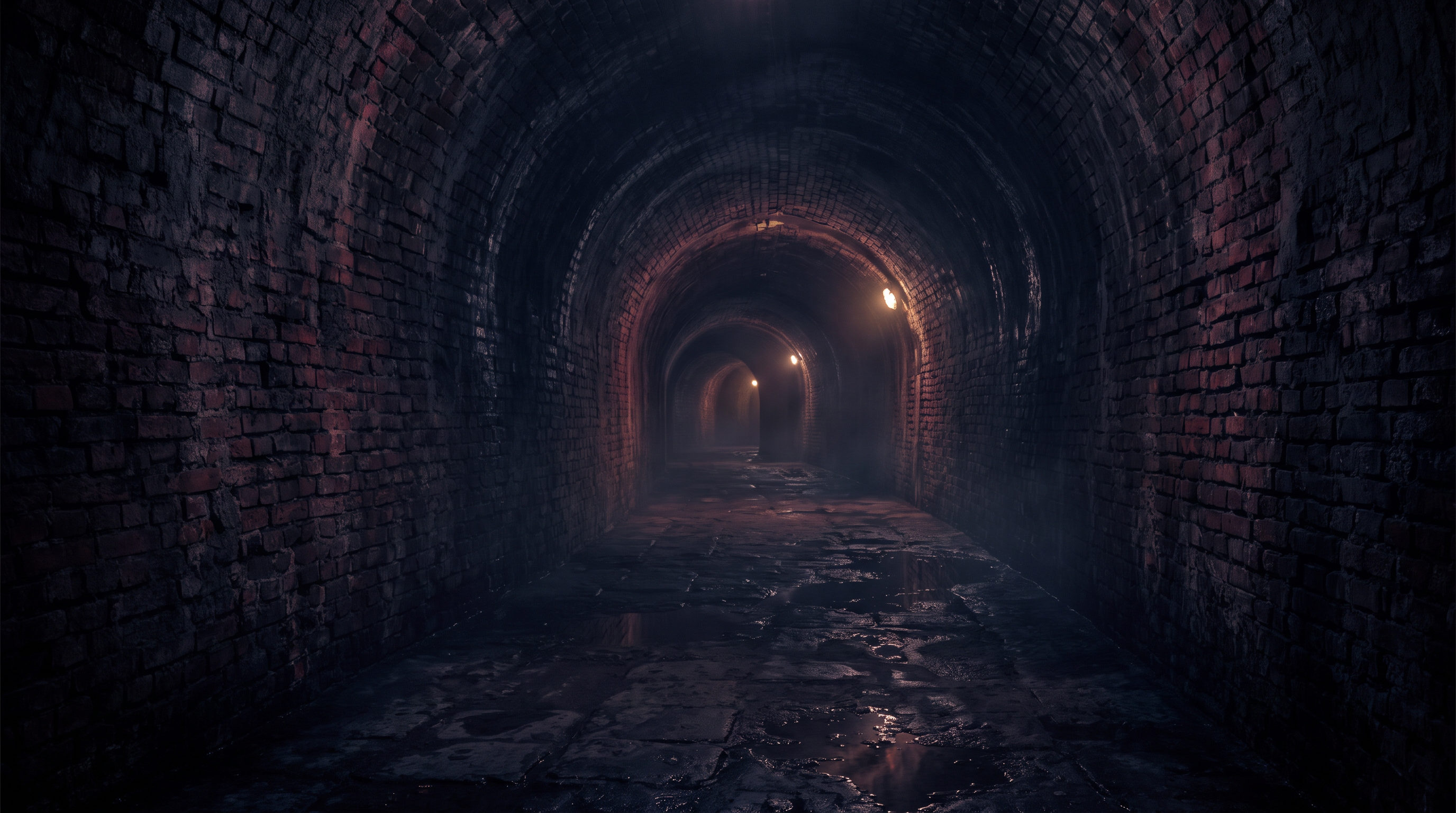
In this paper, the location referred to as Utsunoya Pass (Meiji Tunnel) is described by Shizuoka City as Japan's first toll tunnel, which opened in 1876 (Meiji 9) at a difficult point on the Tokaido road. It has red brick interior walls and ramps, and it is noted that the city preserved and maintained the dilapidated old tunnel after another tunnel was constructed in the early Showa period. There are also tunnels from the Taisho, Showa, and Heisei periods at the pass. Fujieda City also records the completion year of the Meiji Tunnel and its history as a toll tunnel, and provides representative coordinates on an official map.
- Shizuoka City, Utsunoya settlement / Meiji era tunnel(Confirmed on 2026-09-27) — Opened as Japan's first toll tunnel at Utsunoya Pass, a difficult section of the Tokaido Road. Opened in 1876 (Meiji 9), it is known as the "Meiji Tunnel."
- Fujieda City - Japan's first toll tunnel(Verification Date: 2026-09-27) — The "Meiji Tunnel," which runs through the Utsuya Pass, is Japan's first toll tunnel. Fujieda City explains that it was completed in 1876 (Meiji 9), and has included a Google Maps link to its location.
Points of agreement/contradictions
The rumored "four tunnels from the Meiji, Taisho, Showa, and Heisei eras" and the claim that "the Meiji Tunnel was Japan's first toll tunnel" directly match the explanation given by Shizuoka City. Fujieda City also records the opening year of its toll tunnel. However, the historical guides provided by local governments do not include records of whether voices or laughter were heard in the unmanned tunnels. The statement that "no incidents or accidents have occurred" is also based on a comprehensive accident investigation, and therefore, the absence of records should not be used as proof of accident-free operation.
| The rumored atomic claim | Matching results | reason | Corresponding documents |
|---|---|---|---|
| The four tunnels of the Meiji, Taisho, Showa, and Heisei eras | support | Shizuoka City lists tunnels from the Meiji, Taisho, Showa, and Heisei periods at the same Utsunoya Pass, allowing us to directly confirm all four names. | Shizuoka City, Utsunoya settlement / Meiji era tunnel |
| The Meiji Tunnel was Japan's first toll tunnel. | support | Shizuoka City and Fujieda City describe it as Japan's first toll tunnel, which opened in 1876, and this aligns with their historical claims. | Shizuoka City, Utsunoya settlement: Meiji-era tunnel; Fujieda City: Japan's first toll tunnel |
| Voices and laughter can be heard from the deserted mine. | Unconfirmed | There are no audio recordings or observation conditions that would correspond to the local government's history or tourist information, making it impossible to independently verify the rumored experience. | No official data available for direct comparison. |
| No incidents or accidents have occurred. | Unconfirmed | The city's webpage that was checked is a description of the tunnel's history, not a complete record of all accidents, and therefore cannot be used to definitively deny that there have been no accidents. | No official data available for direct comparison. |
Alternative interpretation
The red bricks, lamps, and the former dilapidated state described by Shizuoka City can be interpreted as contributing to the eerie feeling the old tunnel evokes. However, determining that echoes or the sounds of people passing by are the cause of individual voices would require simultaneous observation of the time, location, recording, and on-site observation, which was not obtained in this case.
Scope and limitations of the investigation
The sources used for comparison were individual pages of paranormal information and publicly available documents from Shizuoka City and Fujieda City. Original voice submissions, original recordings, dates and times of occurrence, and comprehensive records of the incident could not be confirmed within the scope of the investigation. Due to the proximity of the four tunnels, general accounts of experiences at the "Utsunoya Tunnel" were not replaced with the measured facts of the Meiji Tunnel.
Verification results: Partial match
The existence of four tunnels and the historical claim that the Meiji Tunnel was Japan's first toll tunnel are supported by local government documents. On the other hand, there are no records to directly compare the comprehensive denial of any voices or laughter being heard in the unmanned tunnel, or the absence of accidents. The partial agreement is limited to geography and the history of its opening, and does not constitute an endorsement of any supernatural occurrences.
Document Quality Score
| Source transparency | 26/30 | There is a separate page for the rumored project, as well as documents from two municipalities, Shizuoka City and Fujieda City, allowing you to compare the opening history and map coordinates using different routes. |
|---|---|---|
| Historical and spatial context | 20/25 | The four generations of tunnels, their opening as toll roads during the Meiji era, and their later preservation and maintenance can be shown on the same timeline for the same mountain pass. |
| Safety information | 14/20 | Shizuoka City provides information on the location and transportation access, but detailed safety conditions for underground observation are not included. |
| Newness of information | 12/15 | I checked the current information provided by the local government and the rumor page with update notifications, but I couldn't determine the exact date and time of the voice experience. |
| Transparency of the source of rumors | 4/10 | While the page number and update date are known, the original source of the voice, the observer, and the scope of the investigation that determined there were no incidents remain unclear. |
| total | 76/100 | This is the overall quality of the materials. It does not represent the degree of truthfulness or danger associated with the supernatural phenomena. |
Safety information and maps
Do not use the historical tunnel and surrounding residential roads as a setting for a test of courage, and avoid obstructing traffic or entering restricted areas. If you do visit, prioritize the latest information from Shizuoka City and Fujieda City and local traffic conditions, and do not recommend exploring alone in the dark.
Map Location: The coordinates of the map link on the Fujieda City official website are used as the representative point. This does not indicate the total length of the tunnel or the route inside the tunnel.
Check the area around Utsunoya Pass (Meiji Tunnel) on Google Maps.
What I learned by crossing locations
What these three locations have in common is that the darkness and age of the actual caves, grottoes, and tunnels make it easy to jump to conclusions about the veracity of the entire accounts. In Jinana, even though the number of monuments and the entry system can be verified with city records, the causal relationship between the torii gate and the accident remains. In Sakama, even though the candles inside the grotto match the explanation from the tourist association, the cause of the wind and voices is a separate issue. In Utsunoya, the history of the four tunnels and the Meiji-era toll tunnel can be confirmed, but the voices inside the unmanned mine and the assertion that "there were no accidents" cannot be confirmed based solely on the materials available. The ranking reflects the quality of the materials, not how scary they are.
summary
What could be confirmed were the monument tower at Jinana and the conditional entry to the cave, the rock cave at Sakama and the candles, and the opening history and preservation of the Meiji Tunnel at Utsunoya Pass. The causal relationship between the sightings of strange occurrences, voices, and accidents cannot be substantiated solely by the rumors and public facility guides published. The wartime relocation and postwar reconstruction of Jinana Asama Shrine add an important timeline not found in the articles about rumors. In the future, the judgment will be reviewed only if primary sources such as original testimonies, observation records, and accident records can be confirmed, and the site of worship and cultural property will not be damaged for the purpose of verification.
FAQ
Is a partial match proof of a paranormal phenomenon?
No. The results are only from verifiable parts of the rumors, such as the number of stupas in Jinana and the candles inside the cave in Hazama. This does not constitute a determination to support the cause of the accident or the sound.
Does "unmeasurable" mean the rumor is wrong?
No. The current municipal documents do not contain any observations or records that can be directly compared to the voices heard in the Meiji Tunnel at Utsunoya Pass, nor to the denial that there have been any accidents. We cannot determine whether the testimonies are true or false based solely on the silence in the documents.
May I verify the rumors in person?
For active religious sites and historical tunnels, please prioritize the latest information provided by the administrators and local governments. Entry to the Jinana Cave requires a guide and is not permitted without permission. Nighttime dares, striking stone Buddha statues, and observations that obstruct passage are not recommended.
How to read this article and safety precautions
" [2026 Latest] Top 3 Ranking of Paranormal Rumors Related to Historical Sites, Shrines, and Temples in the Tokai Region This is an article compiled by the Horror Tales File editorial team as a story, based on publicly available information, rumors circulating in the community, and information submitted by readers. It does not definitively state the authenticity of paranormal phenomena.
- We do not recommend visiting restricted areas, private property, abandoned buildings, or dangerous locations at night.
- If you go to the site, always prioritize compliance with laws and regulations, instructions from facility managers, and consideration for nearby residents.
- You can submit personal experiences, correction requests, and deletion requests through the "Personal Experiences/Information Submission" or "Contact Us" sections.
View editorial policy / Please share your experiences and information here. / inquiry